
Finca in southern Mallorca: between salt pans, coves and market towns
Salt on your skin, a basket of olives and cheese from the weekly market in the boot, and on the horizon the turquoise strip of Es Trenc already glints through the pines. These are precisely the moments that make it worthwhile to look for a finca in southern Mallorca: here, you can combine powder-fine sand with authentic village life, fishing harbours with historic town centres, expansive salt fields with quiet coves known to only a few. The south stretches from Palma via Llucmajor and Campos to Santanyí and Ses Salines, and each of these municipalities has its own rhythm. In Llucmajor, the architecture recalls the heyday of shoemaking, while Campos still thrives today as the supply centre for its agricultural hinterland. Those seeking peace will find it on beaches such as Bassa Cabots or Caló de sa Barca Trencada, where shallow water and small parking areas are all you need for a relaxed morning. Those who prefer bustle and choice will feel at home on Palma's promenade or in lively Cala Major, with cafés, restaurants and short distances to the sea. In between lies Santanyí with its market on Wednesdays and Saturdays, where locals and visitors stroll between stalls selling cheese, olives and fresh vegetables. The inland also has its charms: salt production since antiquity at the Salines de Sa Vall, a botanical garden near Ses Salines with dense cactus fields, as well as neoclassical churches and quiet chapels that tell the story of the region. This diversity makes the south an area that suits couples just as well as families with children, and drivers more than bus travellers, as distances and opening times vary from place to place. As a guide who often drives these routes, I know: anyone who settles into a finca here has the beach, market and history equally close at hand, along with enough peace to hear the crickets in the evening instead of sitting in traffic.
We currently have no accommodation in South
These properties across Mallorca may suit you.
11 properties found11 Holiday rentals in Mallorca
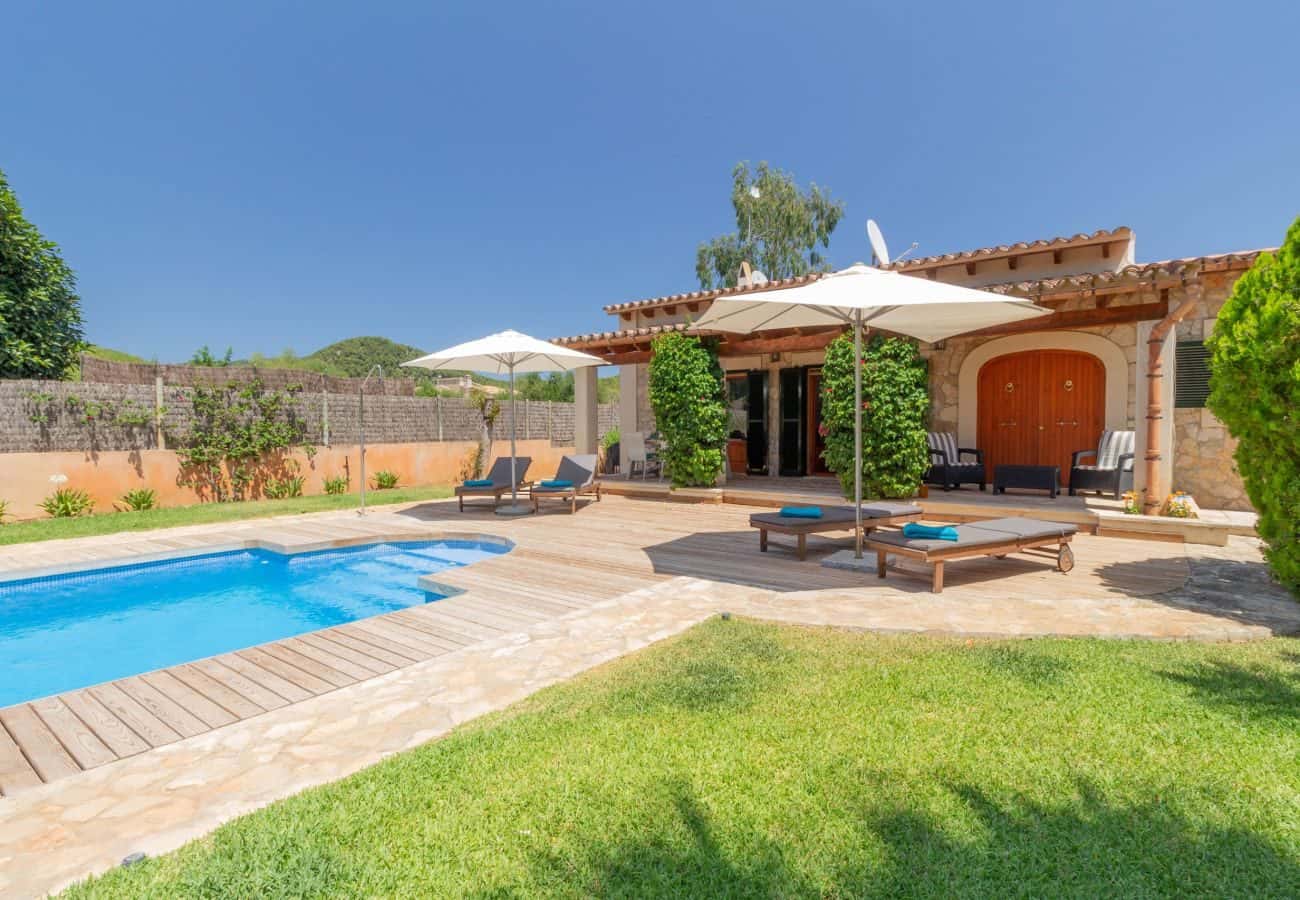
Vista Verde
near Pollença (North)
- 6 guests
- 3 bedrooms
- 3 bathrooms
Registration no.: ETV/4875
per night
€221.14 – €574.96
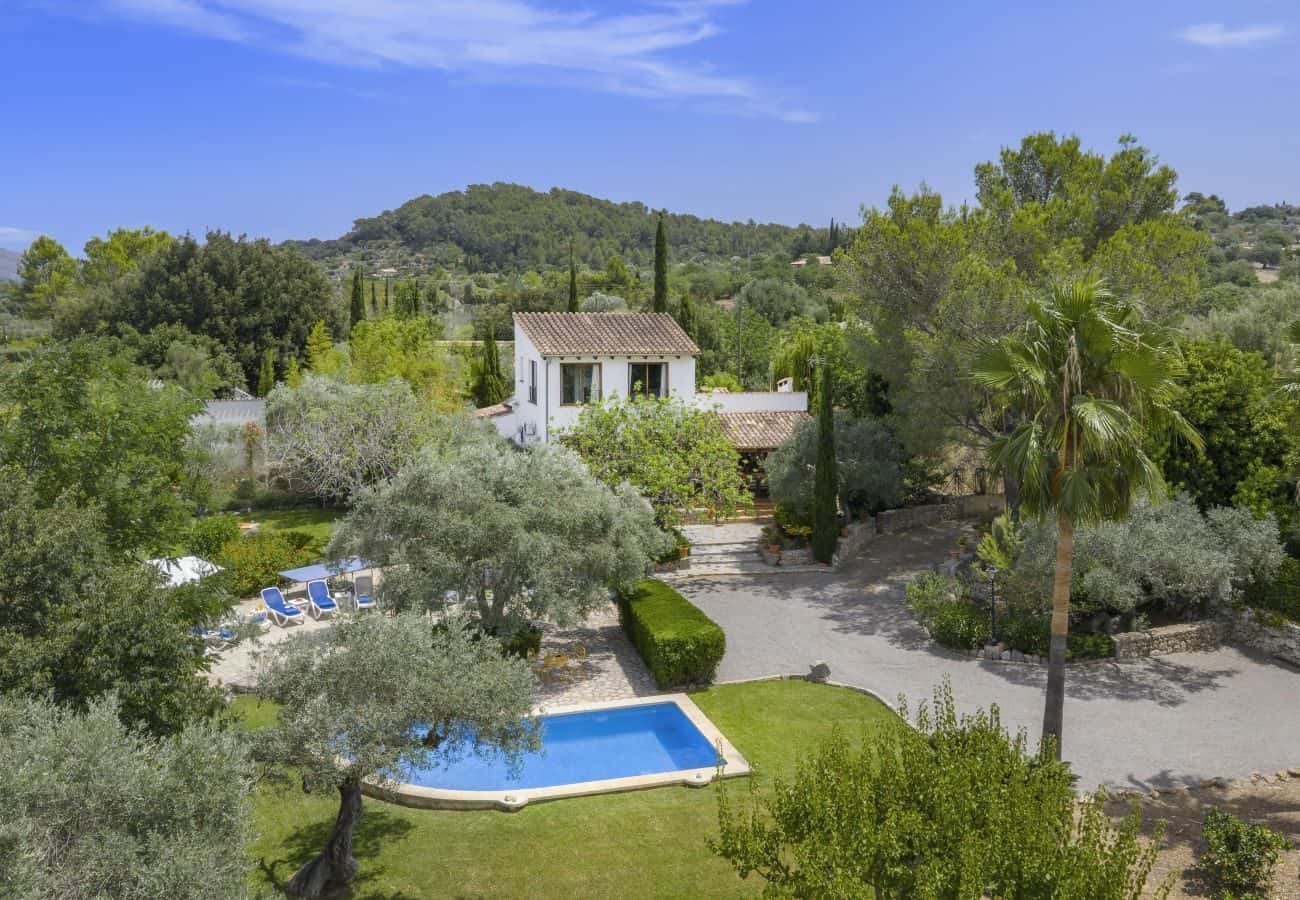
Cal Perdiu Vell
near Pollença (North)
- 6 guests
- 3 bedrooms
- 3 bathrooms
Registration no.: ETV/8616
per night
€252.11 – €671.42
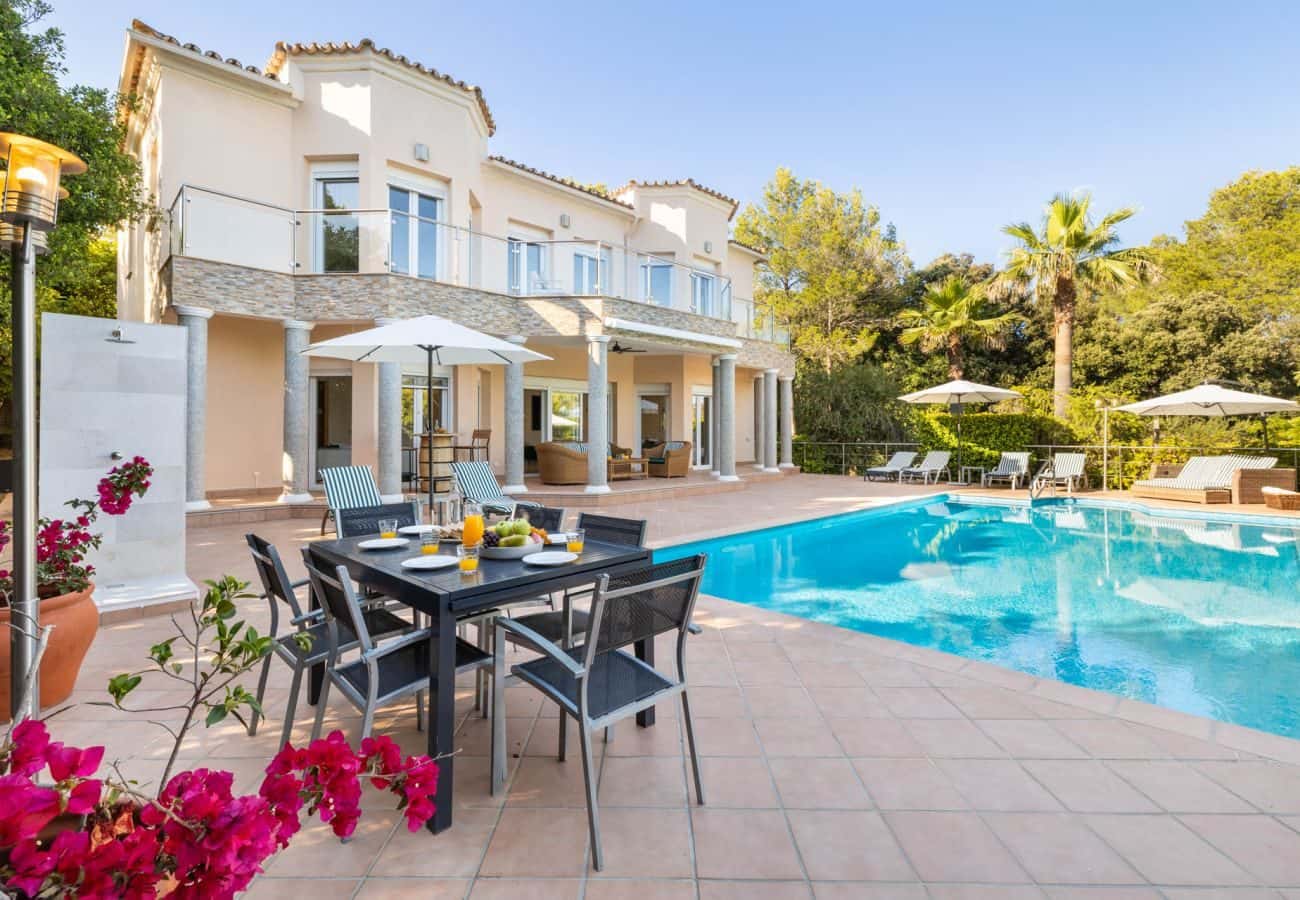
Villa Verde Subach
near Pollença (North)
- 8 guests
- 4 bedrooms
- 5 bathrooms
Registration no.: ETV/10057
per night
€336.13 – €886.55
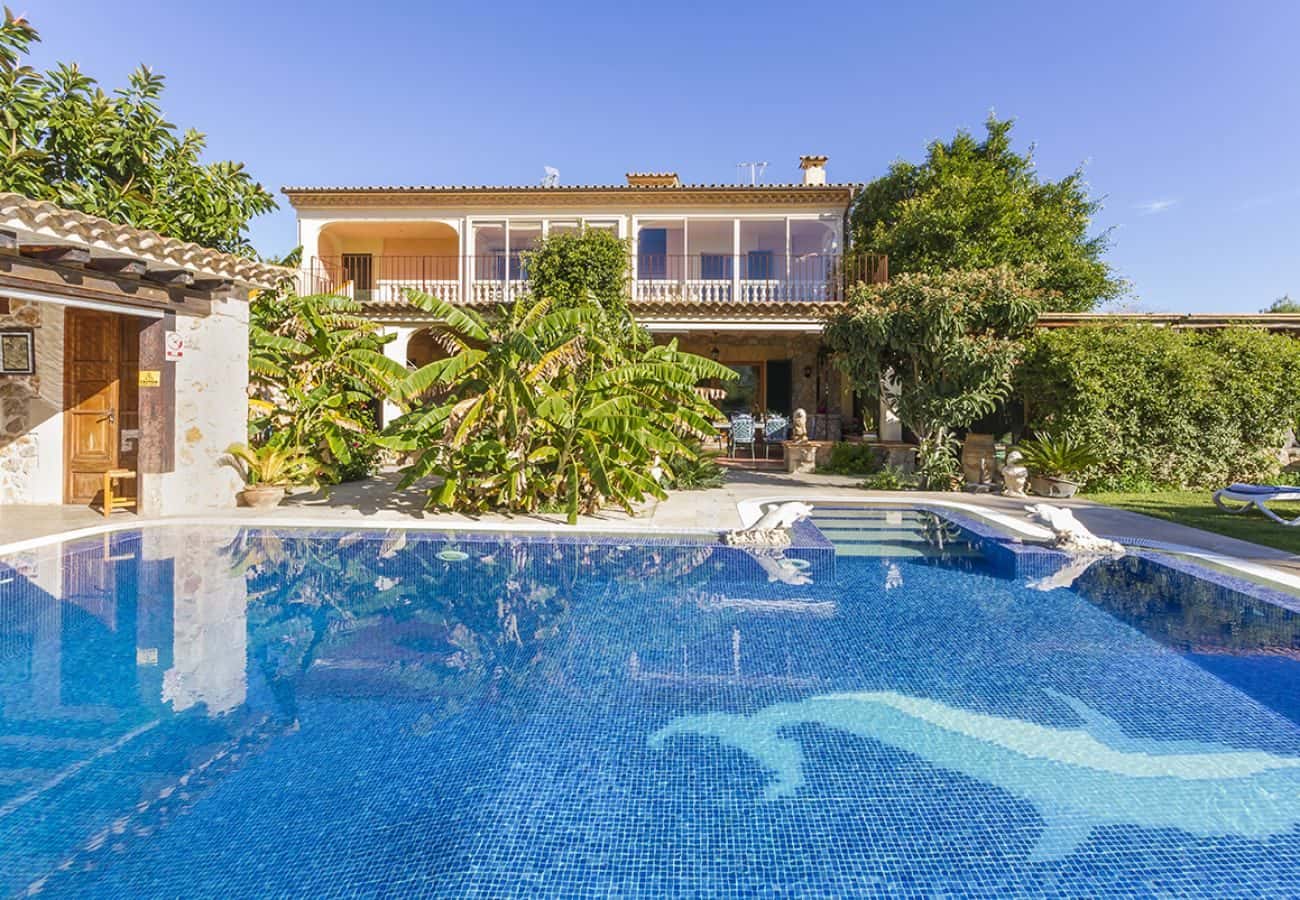
Can Josep
near Pollença (North)
- 8 guests
- 4 bedrooms
- 4 bathrooms
Registration no.: ETV/2445
per night
€423.98 – €878.25
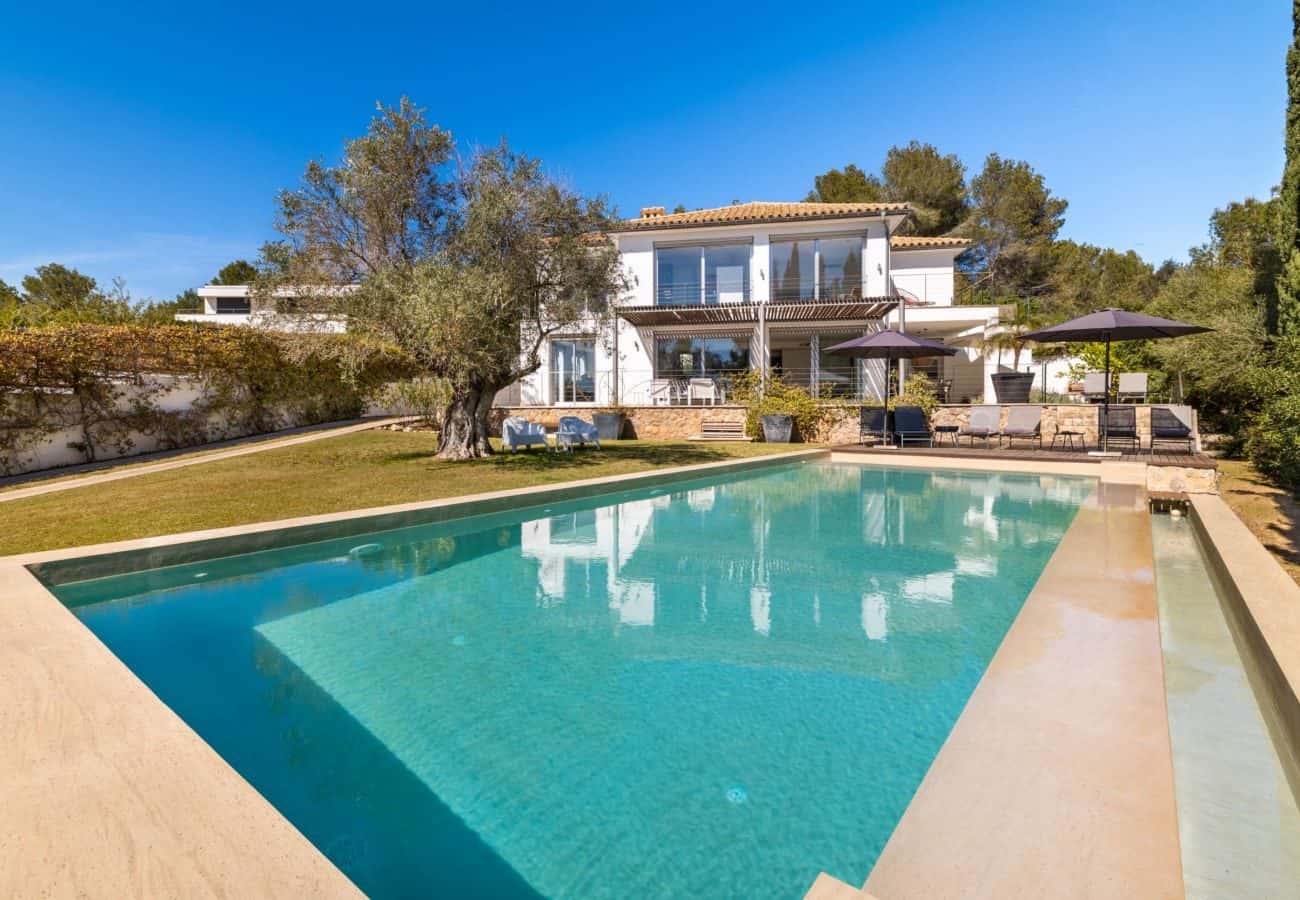
Villa Vista
near Pollença (North)
- 8 guests
- 4 bedrooms
- 4 bathrooms
Registration no.: ETV/10049
per night
€450.42 – €1,029.41
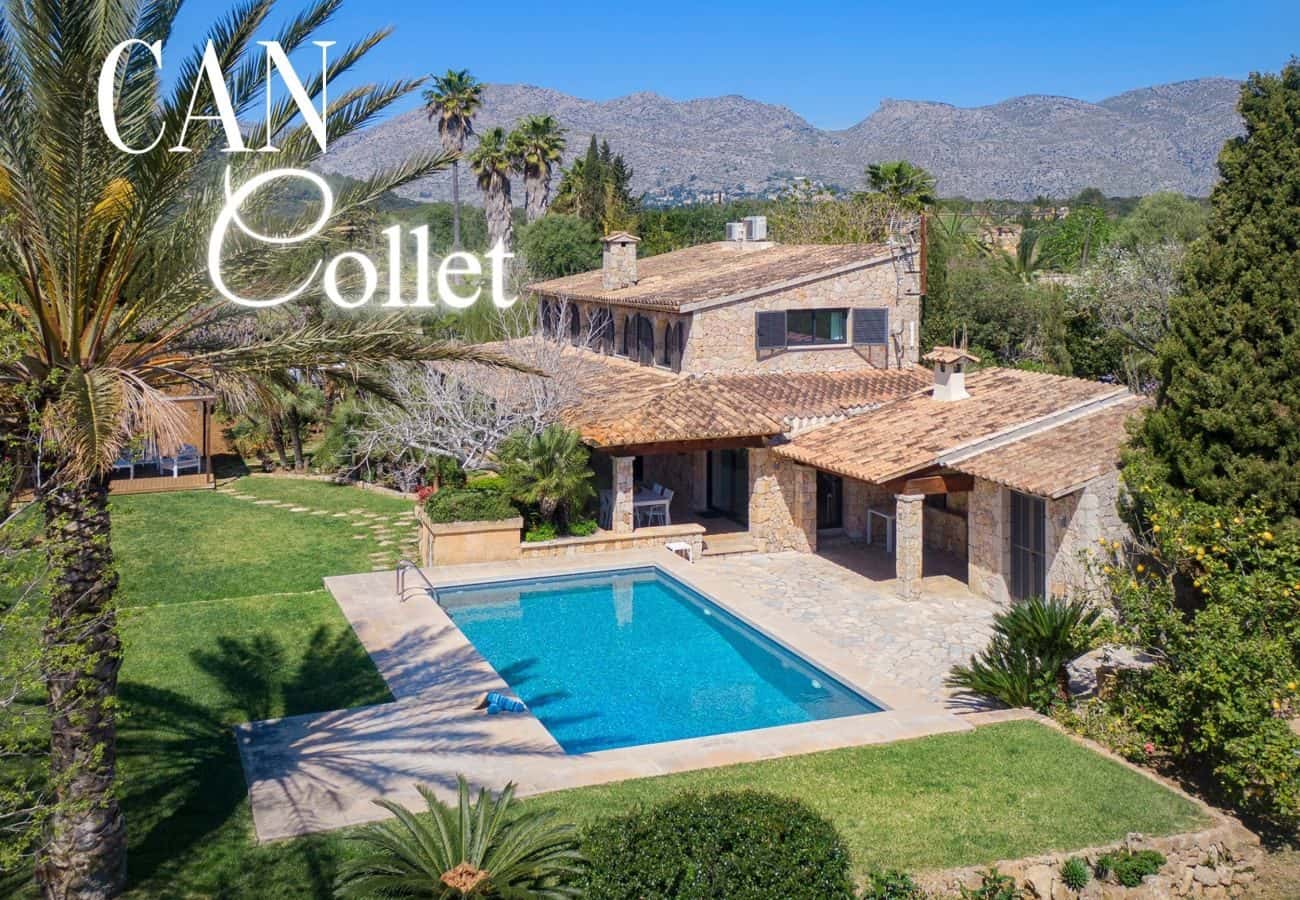
Can Collet
near Pollença (North)
- 6 guests
- 3 bedrooms
- 2 bathrooms
Registration no.: ETV/11408
per night
€478.99 – €1,260.51
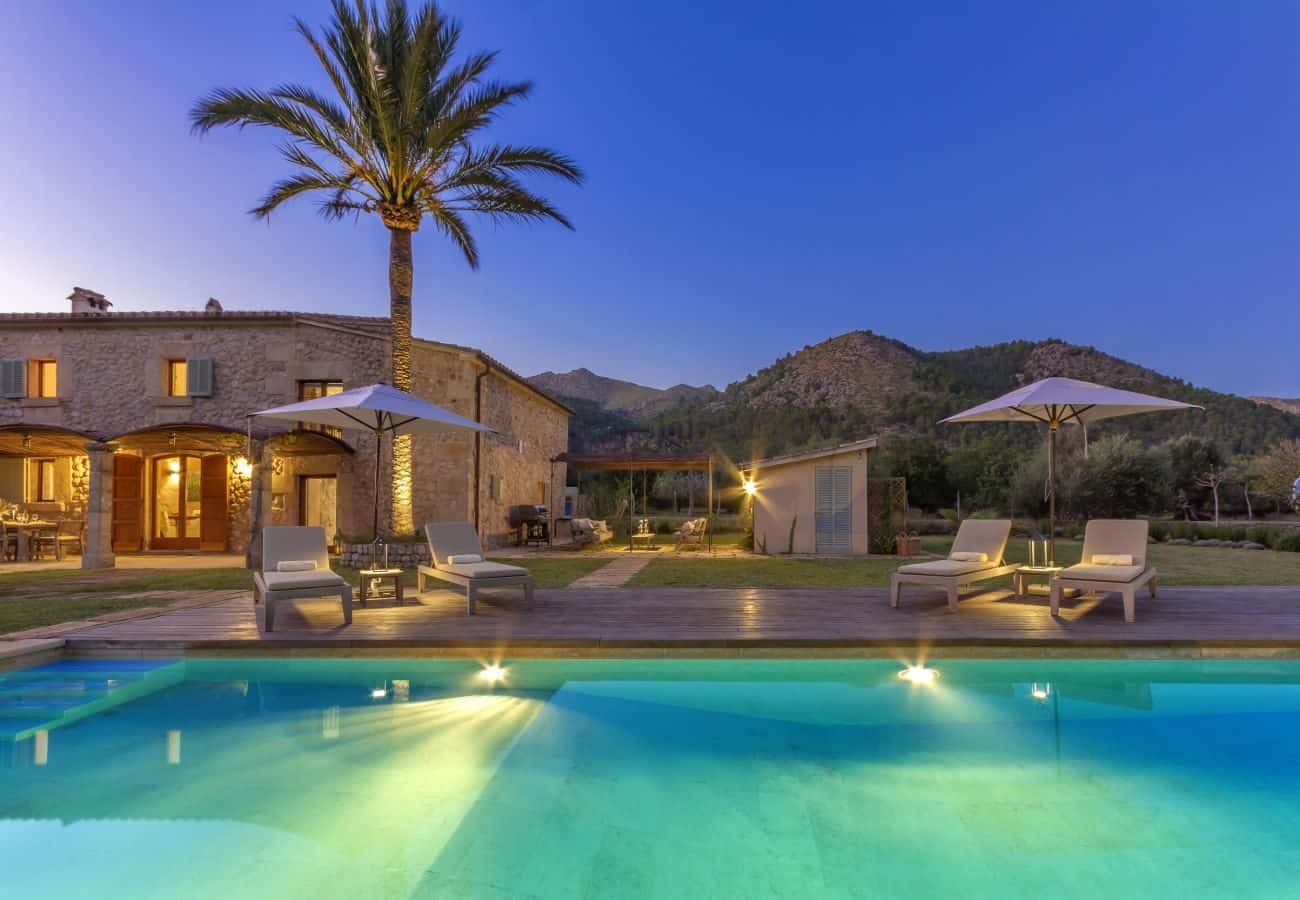
Can Pau
near Pollença (North)
- 8 guests
- 4 bedrooms
- 4 bathrooms
Registration no.: ETV/11866
per night
€533.61 – €1,260.51
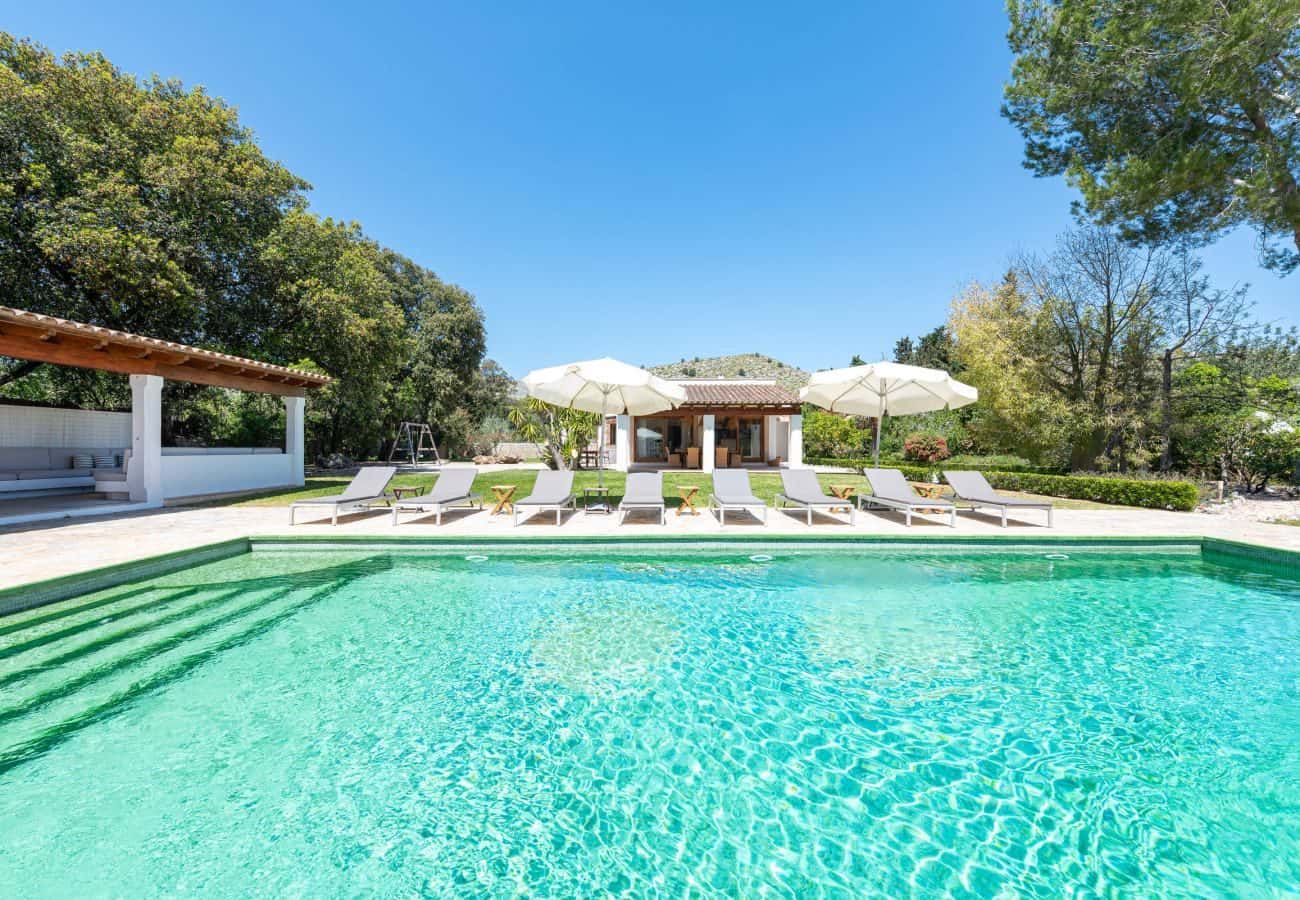
Cal Rei Gran
near Pollença (North)
- 12 guests
- 5 bedrooms
- 5 bathrooms
Registration no.: ETV/2637
per night
€714.28 – €1,806.72
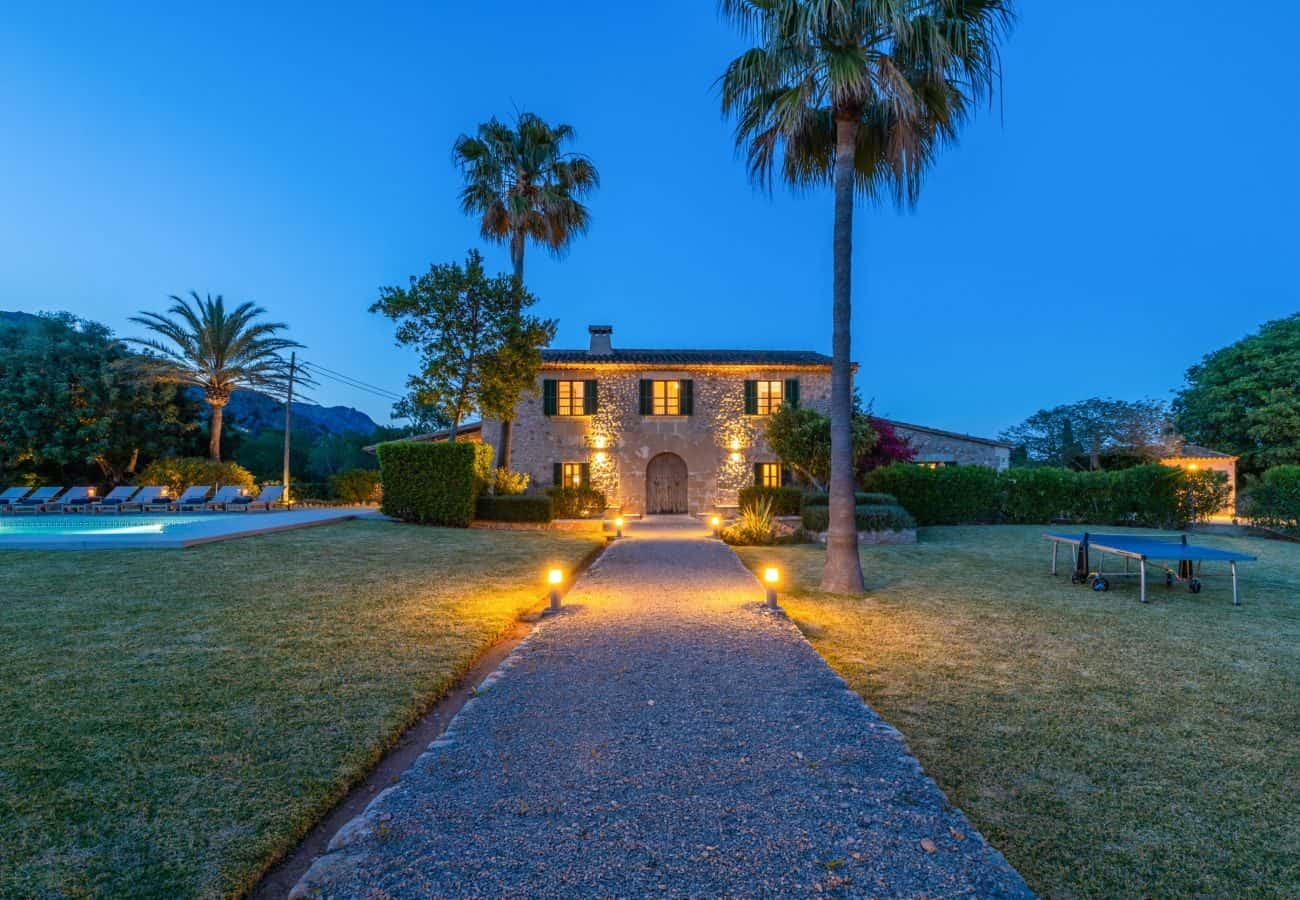
Can Corme
near Pollença (North)
- 10 guests
- 5 bedrooms
- 5 bathrooms
Registration no.: ETV/4866
per night
€1,075.64 – €2,008.40
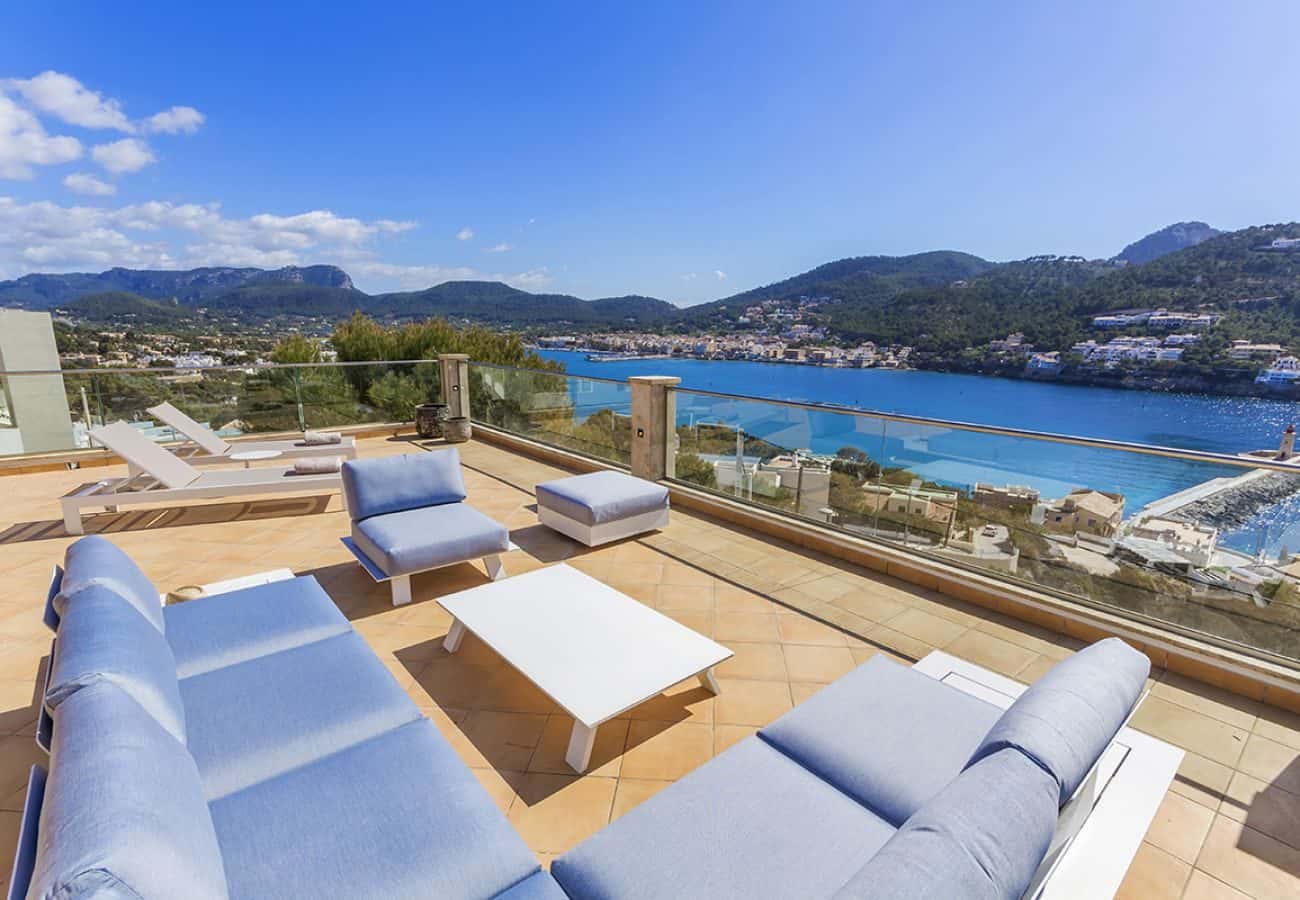
Villa Views Port Andratx
near Andratx (West)
- 7 guests
- 4 bedrooms
- 3 bathrooms
Registration no.: ETV/9286
per night
€1,176.47 – €1,848.74
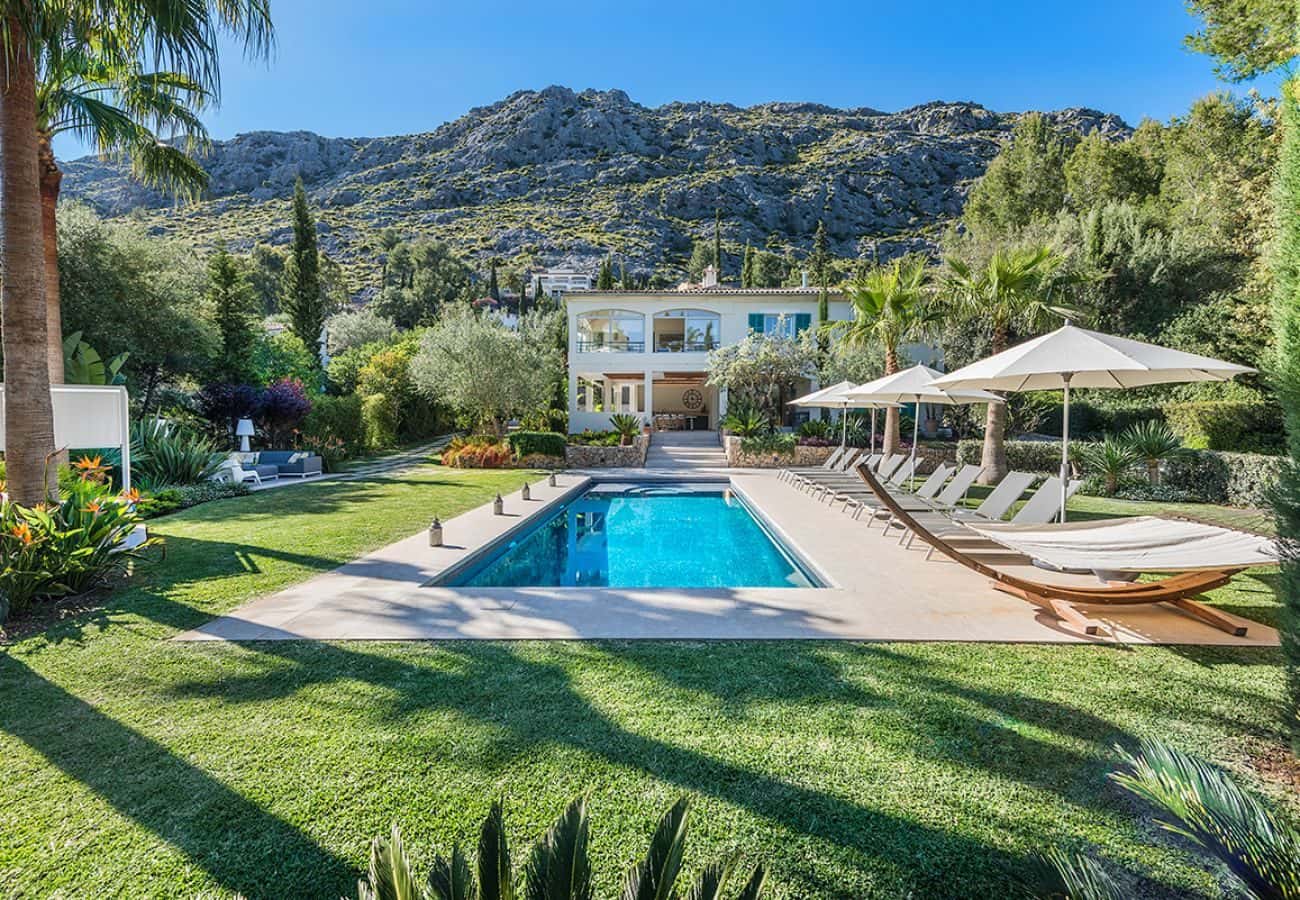
Villa Longa
near Pollença (North)
- 10 guests
- 5 bedrooms
- 5 bathrooms
Registration no.: ETV/312
per night
€1,310.93 – €1,899.16
There are currently no holiday homes listed here for South.
Discover a finca in southern Mallorca
Between Cap de Ses Salines and Serra de Llevant stretches a landscape of salt lagoons, grazing land and coastal towns that have preserved their character shaped by fishing and agriculture. Those looking for a holiday home in southern Mallorca will find municipalities such as Campos, Llucmajor and Santanyí, which differ significantly in pace and character but together form this region. Campos has always seen itself as a supply and trading centre for the agricultural hinterland – a place where the life of the surrounding farms converges. It is precisely this diversity that makes a finca in southern Mallorca the ideal base for getting to know both sides of the region.
Llucmajor has undergone a remarkable transformation: under Jaume II of Mallorca, the town gained importance and was developed into an important royal centre. After the turmoil of that time, Llucmajor went on to develop into an agricultural, artisanal and commercial centre. In the late 19th century, its true heyday began, when the town developed into a major centre of shoe manufacturing – an era whose traces can still be seen in the townscape today. Anyone strolling through the lanes can sense this transformation from a small rural town into a factory town, without the tranquillity of the rural surroundings having been lost.
Quite different are the salt gardens of Salines de Sa Vall: salt has been extracted there since antiquity, and operations continue to this day – a rare piece of living economic history right on the coast. Not far away lies Cala Figuera, a place shaped by fishing, where fishermen's houses with their boat garages stand close to the water. Those who come here in spring or autumn experience these contrasts between work and tranquillity particularly intensely, entirely without the heat and bustle of the high season. My tip: sit by the harbour of Cala Figuera early in the morning, before the day-trippers arrive, and let the history of the place literally unfold before your eyes. It is precisely this blend of craft tradition, salt history and fishing villages that makes it so appealing to set out from here and discover the south on your own.
Arriving and the first kilometres in the south
The Ma-19 forms the backbone of every journey to this part of the island: it leads directly from Palma Airport to Palma and from there serves as the main route southwards, whether your destination is Llucmajor or the more distant Santanyí. Llucmajor itself lies southeast of Palma directly on this route and benefits from a direct road connection, making the town an uncomplicated stopover. If you want to rent a finca in southern Mallorca, you can continue exploring the region from here at a relaxed pace, without having to navigate a maze of small roads – so your stay in your finca in southern Mallorca begins with a clear route rather than detours.
If you are travelling without a car, Palma's Estació Intermodal is an important starting point for connections to other parts of the island. Llucmajor also has several bus stops in the western and central parts of town, making it easy to include in a route without a rental car. My tip: if you want to visit Botanicactus, do not count on a direct bus connection to the entrance – the road there does continue on to Santanyí, but you will cover the last few metres to the garden on foot or in your own car. Especially on busy market days in Campos, it is worth parking a little further out, as finding a parking space along the market route becomes unnecessarily difficult during the larger market.
In Palma itself, it is advisable to park your vehicle before strolling through the old town – in any case, the narrow lanes are best explored on foot, with your senses open to the details on the façades. At the beaches further south, parking varies considerably: at Cala Major it is subject to a fee, while at Bassa Cabots you will find free parking spaces close to the beach. If you know these differences, you can plan your day more leisurely and spend the time you save at the beach rather than looking for a parking space. So a holiday in southern Mallorca often begins in the very first kilometres with a good sense of routes and distances.
Beaches between sandy coves and rocky coastline
Between Ses Salines and Llucmajor, the sea shows several different faces, and anyone looking for a holiday apartment in southern Mallorca will find a suitable cove for every taste. Es Trenc is considered Mallorca's longest natural beach and also the best-known coastal destination in the municipality of Ses Salines. Cala Pi is quite different: the narrow cove stretches around 150 metres inland and therefore feels almost like a natural fjord. For those wishing to avoid the bustle: Ses Salines' actual coastal destinations are not located directly by the village square, but a little further out, which in itself makes for quieter moments.
Not every cove here is a broad expanse of sand. Cala Figuera, for example, has no classic sandy beach at all, but instead a harbour where boats lie packed tightly together and the water smells of salt and diesel. Cala Santanyí, on the other hand, offers a sandy beach, tourist infrastructure and good conditions for snorkelling, while Caló de sa Torre, with its two gently sloping sandy sections, is particularly suitable for families with children. My tip: if you want to avoid the crowds in high summer, plan your weekday mornings for the better-known coves and save the afternoon for the smaller sections.
Those who prefer things more manageable will find short distances, a little shade and a beach that can be taken in at a glance at Caló de sa Barca Trencada. This small stretch of coast is also well visited in high season, so sturdy footwear is worthwhile for longer approaches, along with water and sun protection, as not every section is shaded. After a day by the sea, retreating to your own terrace tastes twice as good when the crickets chirp in the evening and the day at the beach slowly comes to an end.
Churches, monasteries and monuments away from the coast
Inland from the beaches, a quieter side of the villages in southern Mallorca emerges, shaped by faith and craftsmanship rather than parasols. In Campos stands the parish church of Sant Julià, a neoclassical building constructed between 1858 and 1873 whose clear façade defines the townscape. In Ses Salines, meanwhile, the parish church of Sant Bartomeu was built in the late 19th century; its façade was renewed at the beginning of the 20th century with pale sandstone from Santanyí – a material that still gives it a warm, almost honey-coloured tone today, especially when the afternoon sun falls on it.
Also in Ses Salines, a detour to Ca ses Monges is worthwhile, a monastery building from the beginning of the 20th century that stands right in the middle of the village and is not a secluded monastery outside the settlement – one reason why the short walk there can be casually incorporated into a stroll around the village. In Campos, the Museum of the Missioneres dels Sagrats Cors is a small biographical house displaying manuscripts, clothing, embroidery and personal belongings of the order's founder. However, anyone expecting grand altars, spectacular church architecture or an extensive art collection will be disappointed here – the place is too small and too personal for that. My tip: As access to the museum cannot be assumed at all times, it is worth making a brief enquiry locally or at your accommodation before planning your visit.
Those who prefer the secular will find what they are looking for in Llucmajor: there is a monument to Jaume III and his son Jaume IV, and another elsewhere in the town commemorates the same royal pair – a quiet indication of how strongly Mallorca's history still resonates here. There is often only a short lane between the church square and the monument's pedestal, and anyone out and about on a quiet morning will usually have the places to themselves. After a morning among church towers and monastery walls, the evening on the finca terrace tastes twice as much like a holiday.
Markets, Shops and Restaurants in the South
Weekly markets set the rhythm of the villages in the south. In Santanyí, stalls are set up on Wednesdays and Saturdays, and those who arrive early experience full stalls and lively comings and goings between them. In Llucmajor, market day for farmers and artisans takes place three times a week, with an additional flea market on Fridays. Those who enjoy browsing should plan for Friday and combine fruit, cheese and a souvenir from the flea market in one go.
Away from the market stalls, the south provides for everyday needs in a very practical way. The main town of Santanyí offers supermarkets, grocery shops and dining options for daily life, complemented by a selection ranging from cafés to restaurants around Plaça Major and the adjoining streets, where the day can stretch from breakfast coffee to a longer evening meal. At the harbour of Portopetro, cafés, shops and restaurants serving fish and seafood line the promenade, while Colònia de Sant Jordi also has everything needed for a relaxed holiday day, with cafés, bars, restaurants and shops just a few minutes' walk from the beach.
Those who prefer to cook for themselves will find local products with a history in the surrounding area: almonds, figs, carob and wine grow around Llucmajor and appear at market stalls and in small shops depending on the season. The weekly market in Ses Salines is also worth a detour, as traders offer cheese, cured meats, olives and olive oil from the region, depending on availability. My tip: combine a market visit with Botanicactus and structure the day deliberately—either start early among the cacti or stroll through the market first and then allow enough time for the garden. Back at your own finca, the market purchases can then be turned into an open-air dinner at leisure.
Who the south is really suited to
Families with children will find several beaches in the south that seem made for exactly that. Caló de sa Torre slopes gently into the water along two sandy sections, while Bassa Cabots offers a mostly gentle entry despite its manageable size. Even though the rocky edges require some attention, the beach remains easy to manage with younger children. Those who would rather show plants than waves can visit Botanicactus with the family, moving among large plants, water features and a play area—an especially welcome change from a beach day on hot afternoons. A finca in southern Mallorca is therefore well suited to families who want to spend their mornings by the water and their afternoons surrounded by greenery.
Not every place in the south suits every need. Bassa Cabots is less suitable if you are looking for a wide expanse of sand, long beach walks, reservable sun loungers or complete infrastructure—in that case, a trip to larger coves is worthwhile. Anyone expecting museum highlights should not expect spectacular church architecture, grand altars or extensive art collections at Missioneres dels Sagrats Cors; the building is better understood through its history than through its splendour. My tip: deliberately plan such smaller destinations as a quiet contrast, rather than as the main attraction of the day.
Those who want to teach their children something about the island at the same time will find an approach at Ca ses Monges through the former girls' school, even though no dedicated children's programme is offered there. Families requiring medical assessment are well provided for in Santanyí, where an orthopaedic specialist practice with radiological equipment is available on site. This keeps the south a region that allows both peace and small outings—ideal for anyone who wants to use their finca as a quiet retreat with short distances to the beach, nature and essential services.
Practicalities for arrival and everyday life in southern Mallorca
Anyone arriving in Palma and continuing south should park their vehicle at the edge for a stroll through the old town and continue on foot – the lanes there are narrow, and a parking space in the centre rarely brings much joy. In Santanyí, on the other hand, daily shopping is part of the town's regular rhythm, regardless of the time of year one visits. So anyone arriving in winter need not worry about finding closed shops.
For minor health concerns during a holiday, it is worth looking to Santanyí: there is an orthopaedic specialist practice with radiological equipment, which can be reassuring, especially after an unfortunate fall on the rocks or while hiking. Anyone wishing to swim at Caló de sa Barca Trencada should know that the small beach is considered heavily frequented during the season – those who prefer it quieter should opt for an early morning.
It can also get crowded at Bassa Cabots during the summer months, although the free parking spaces in the immediate vicinity of the beach make getting there easier. My tip: go early in the morning. Then there is still enough room for a beach blanket, and the drive back to the finca is relaxed, without a line of cars on the road.
Frequently asked questions
How far is it from Palma Airport to the south of the island?
The Ma-19 is the main connection from the airport and from Palma towards Santanyí and serves as a direct road route to the south. Ses Salines is around 47 kilometres away by road. Llucmajor lies southeast of Palma directly on this route, making the journey straightforward, whether the destination is a coastal town or a village inland.
Is Es Trenc suitable for a holiday with children?
Yes, Es Trenc is considered family-friendly thanks to its shallow entry and gentle waves, and it is also the island's longest natural beach. Those who prefer something smaller and quieter will find alternatives with a similarly gentle entry into the water at Caló de sa Barca Trencada or Caló de sa Torre, though on a much more manageable scale.
On which days are the well-known weekly markets held?
In Santanyí, market day is on Wednesdays and Saturdays, whereas in Llucmajor it takes place three times a week with farmers and artisans. Those who enjoy browsing should also plan to visit the flea market in Llucmajor on Fridays. In Campos, it is worth arriving early on the larger market day, as finding a parking space along the market route otherwise becomes more difficult.
Is Cala Figuera a classic bathing beach?
No, Cala Figuera does not have a classic sandy beach, but rather a harbour where boats are lined up closely together. The place was traditionally shaped by fishing, clearly visible in the fishermen's houses with their boat garages along the water. Those looking instead for sand and a gentle entry into the sea are more likely to find it at Cala Santanyí, which offers a sandy beach, tourist infrastructure and good conditions for snorkelling.
Can I reach Botanicactus by public transport?
The bus does not take you directly to the entrance of the garden; part of the way therefore still has to be covered on foot or by car. The road by the garden continues to Santanyí, which can be combined well with a detour. Those who want to avoid crowds should set off among the cacti early or visit the market first and then allow enough time for the garden.
Are there shopping opportunities in Santanyí even outside the season?
Yes, in Santanyí it is possible to shop daily even in winter, regardless of the season. The main town offers supermarkets, grocery stores and restaurants, as well as an orthopaedic specialist practice with radiological facilities if needed. Around the Plaça Major, the culinary offerings range from breakfast cafés to restaurants for a longer evening.