
Finca in Mallorca with a Dog: Holidays for Two- and Four-Legged Guests
The bowl rattles in the backpack, the leash is already dangling from the door handle, and your dog is running excited circles because it senses that something is about to happen. It is precisely for moments like these that a finca in Mallorca with a dog is worthwhile: plenty of space to settle in, your own rhythm for walks, and no one at a reception desk looking askance when four paws check in too. The island itself does not make things easy for dog owners everywhere. On most beaches in Mallorca, dogs are prohibited during the high season, except on designated dog beaches, and anyone who ignores this risks a fine. Nevertheless, there are such designated dog-friendly beaches on the island, and walks with a dog are permitted at Playa de Muro between 1 November and 28 February, when beachgoers have become scarce and the sand is almost all yours. Mobility with a dog is also possible while getting around: a few bus routes on the island expressly allow dogs. Such details often have more influence on a successful holiday than the accommodation's amenities themselves. A finca gives you the freedom to navigate these rules with ease instead of having to adapt to them every day: a fenced garden instead of mandatory leashes in the hotel corridor, a quiet morning run along country paths instead of weaving around parasols. Read the following sections to find out how to find the right finca, which landscapes and places are suitable, what you should know about the time of year, and what to look out for when it comes to amenities and booking.
We currently have no accommodation in Dogs welcome
These properties across Mallorca may suit you.
11 properties found11 Holiday rentals in Mallorca
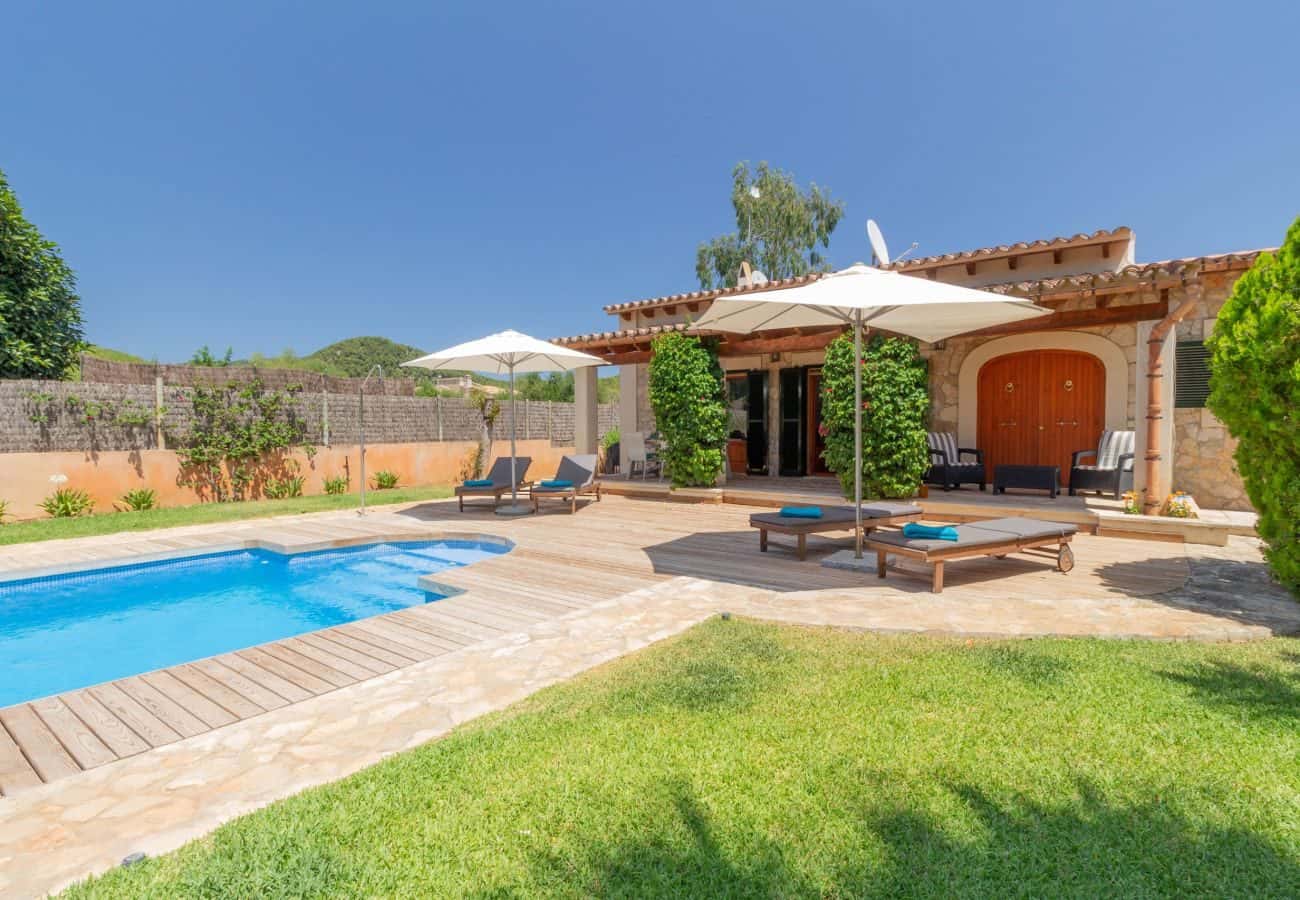
Vista Verde
near Pollença (North)
- 6 guests
- 3 bedrooms
- 3 bathrooms
Registration no.: ETV/4875
per night
€221.14 – €574.96
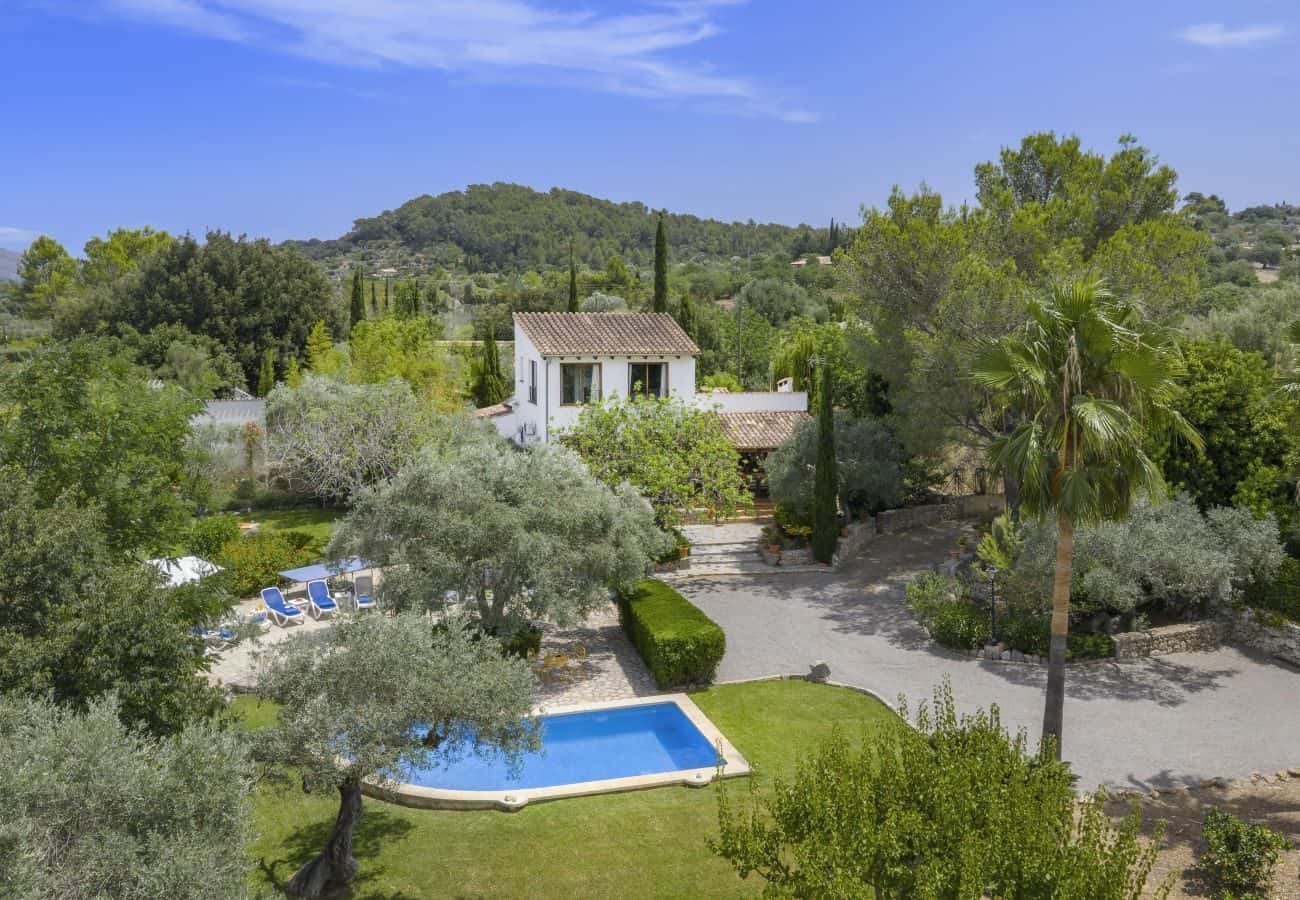
Cal Perdiu Vell
near Pollença (North)
- 6 guests
- 3 bedrooms
- 3 bathrooms
Registration no.: ETV/8616
per night
€252.11 – €671.42
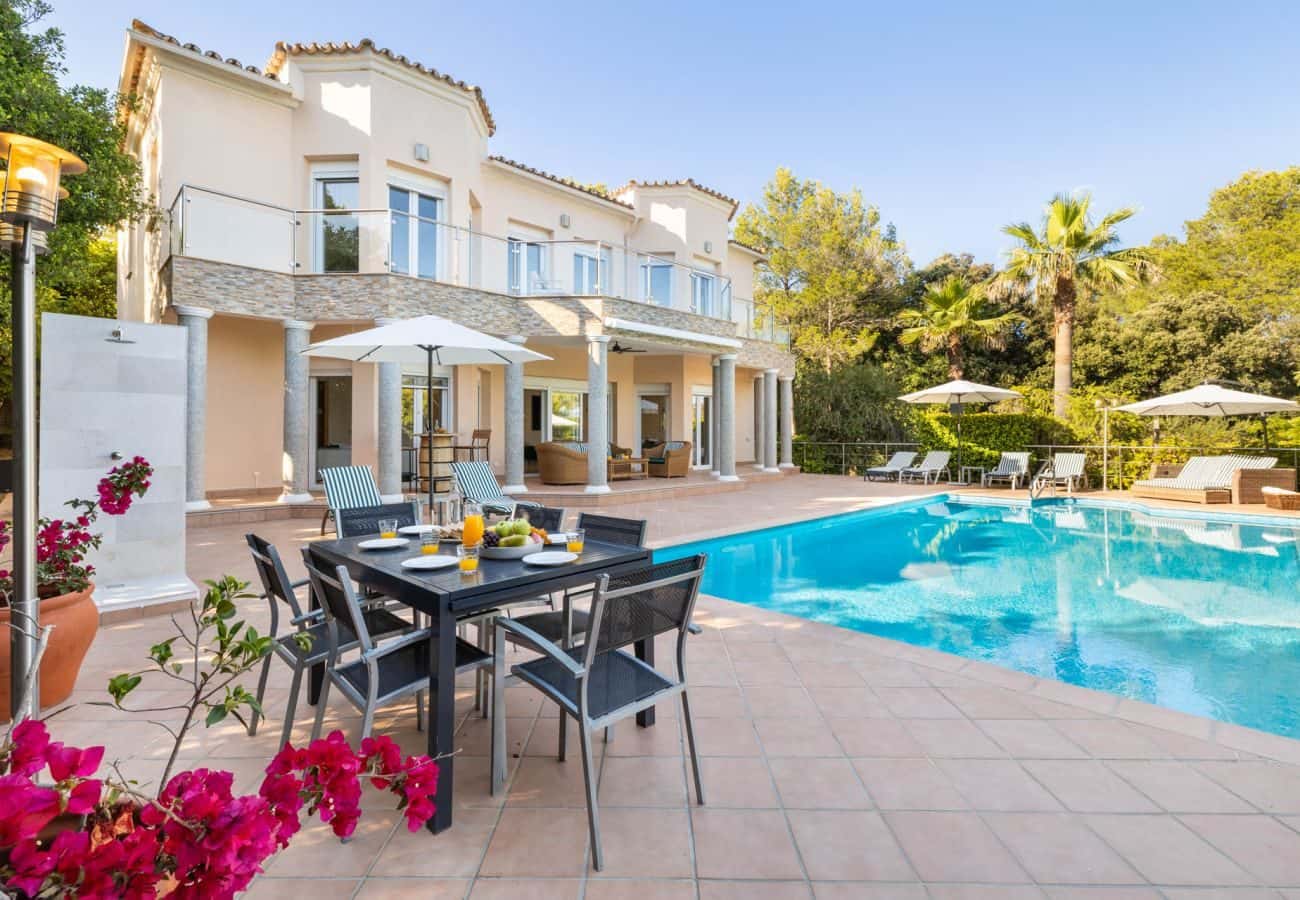
Villa Verde Subach
near Pollença (North)
- 8 guests
- 4 bedrooms
- 5 bathrooms
Registration no.: ETV/10057
per night
€336.13 – €886.55
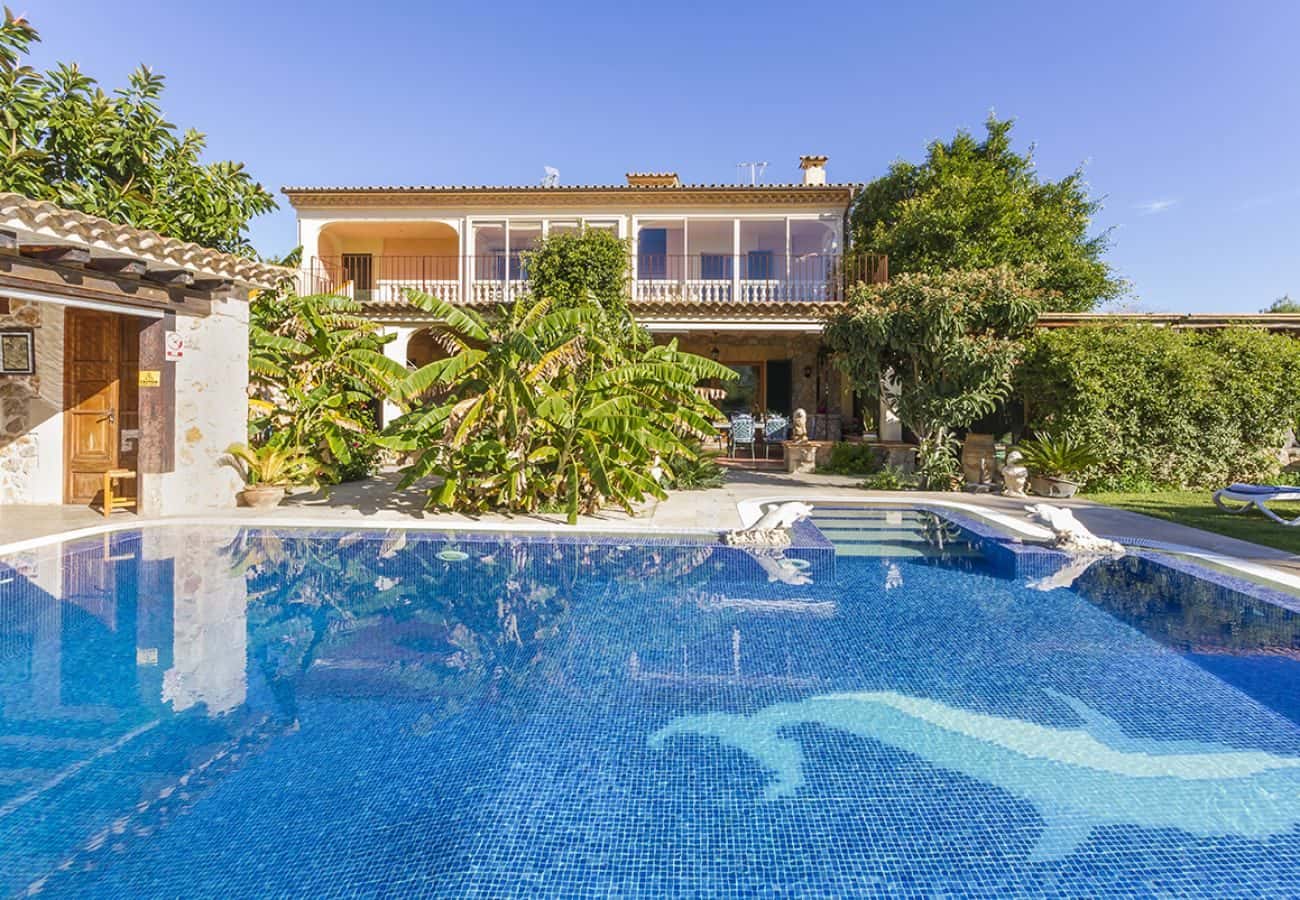
Can Josep
near Pollença (North)
- 8 guests
- 4 bedrooms
- 4 bathrooms
Registration no.: ETV/2445
per night
€423.98 – €878.25
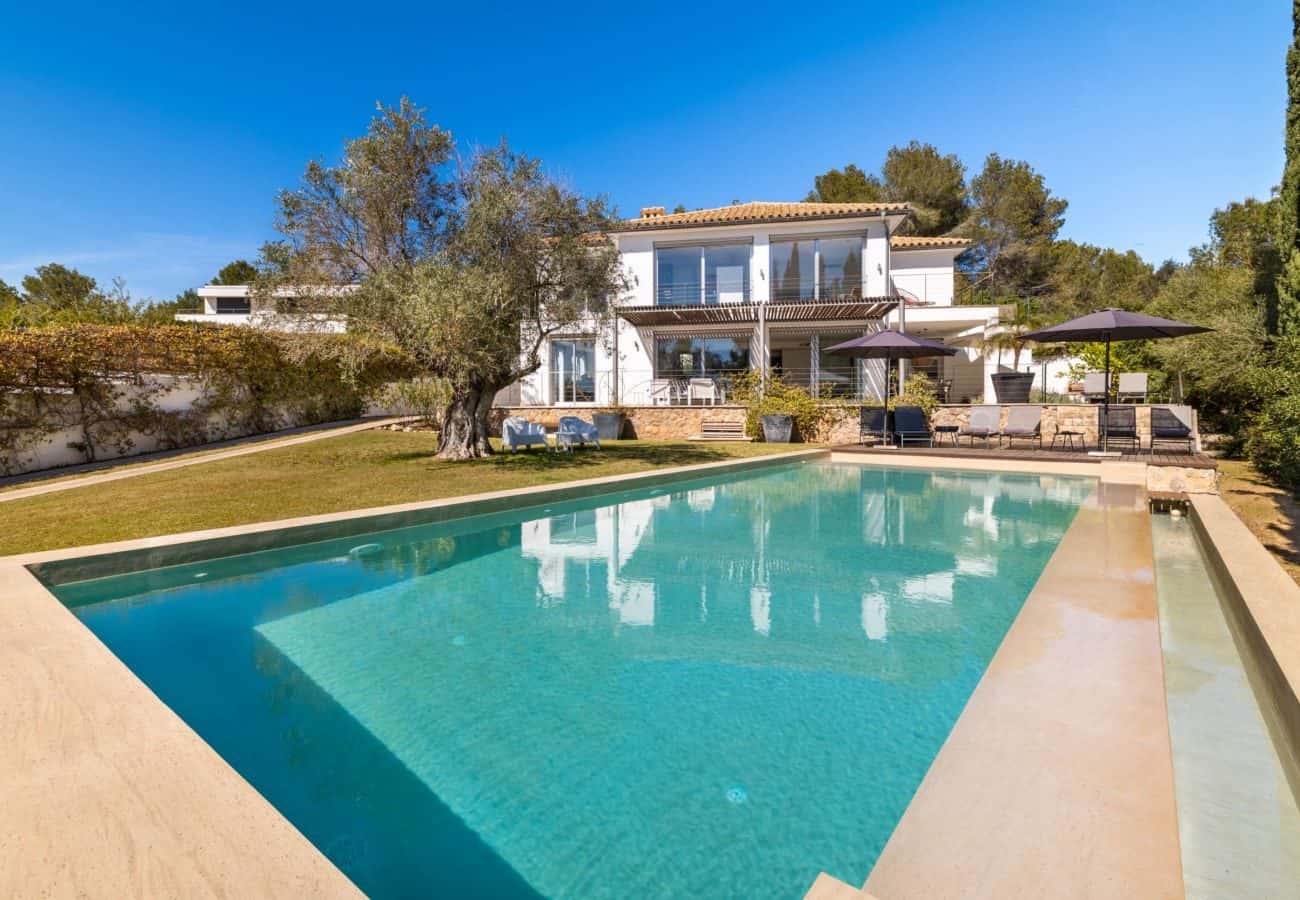
Villa Vista
near Pollença (North)
- 8 guests
- 4 bedrooms
- 4 bathrooms
Registration no.: ETV/10049
per night
€450.42 – €1,029.41
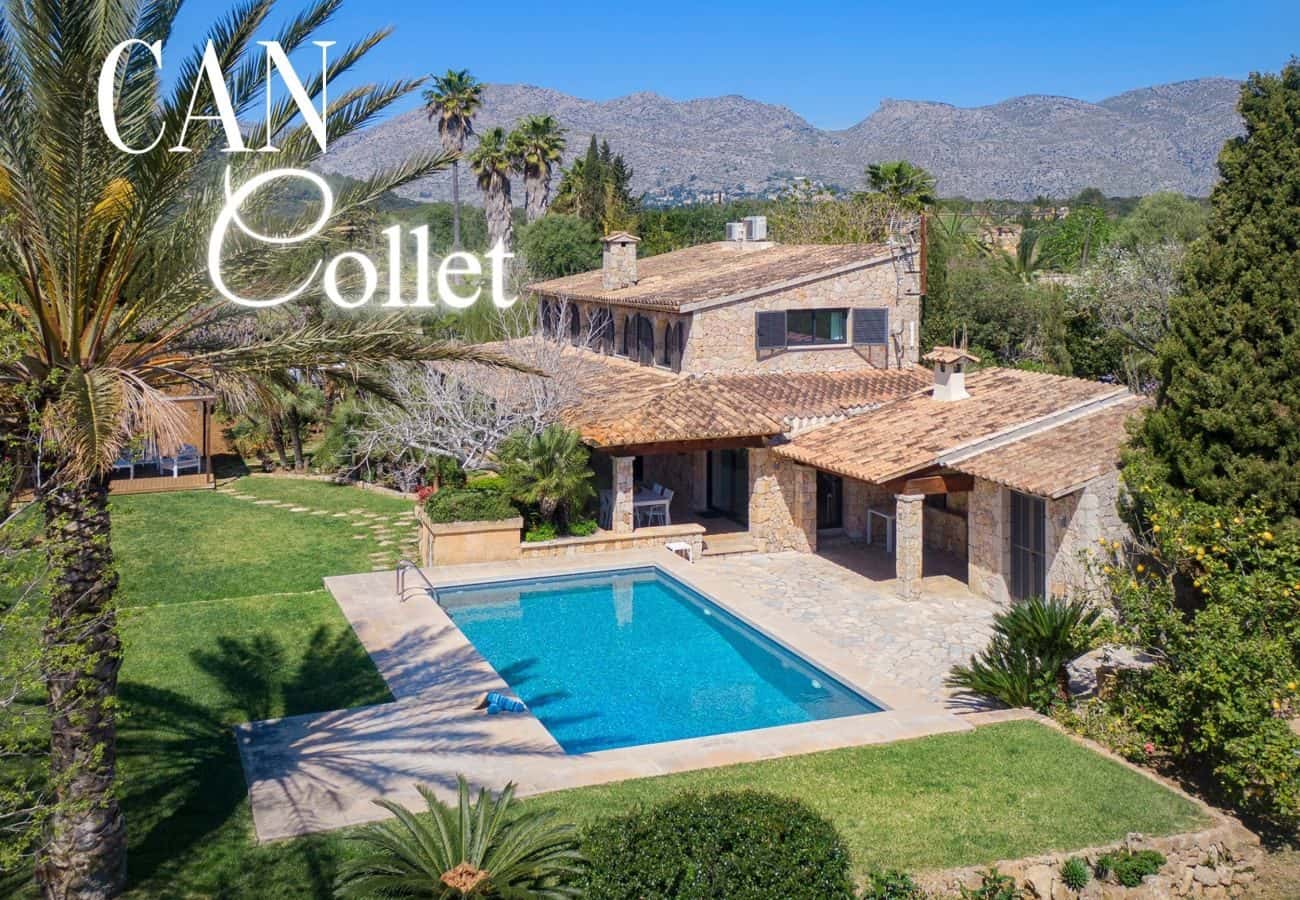
Can Collet
near Pollença (North)
- 6 guests
- 3 bedrooms
- 2 bathrooms
Registration no.: ETV/11408
per night
€478.99 – €1,260.51
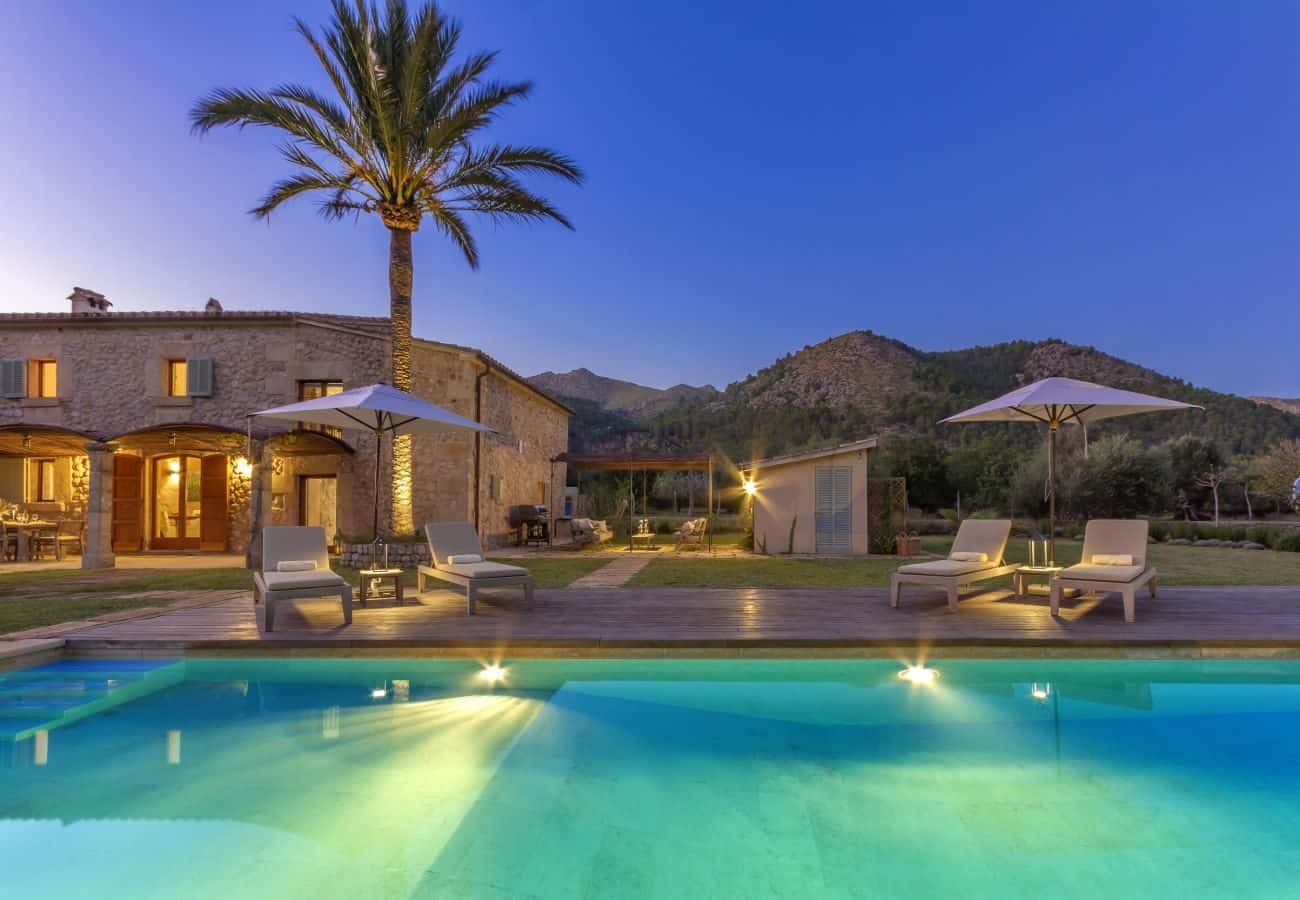
Can Pau
near Pollença (North)
- 8 guests
- 4 bedrooms
- 4 bathrooms
Registration no.: ETV/11866
per night
€533.61 – €1,260.51
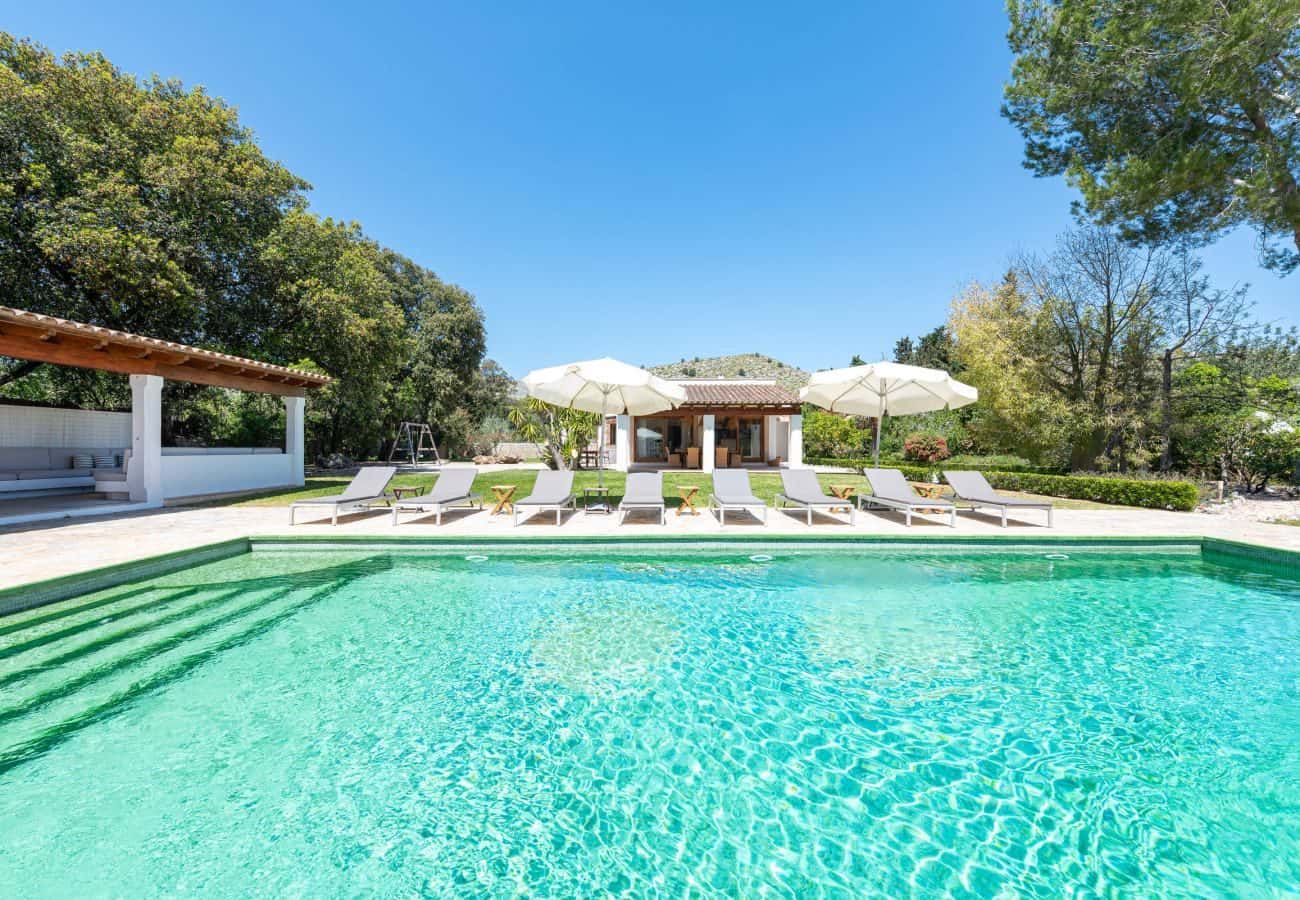
Cal Rei Gran
near Pollença (North)
- 12 guests
- 5 bedrooms
- 5 bathrooms
Registration no.: ETV/2637
per night
€714.28 – €1,806.72
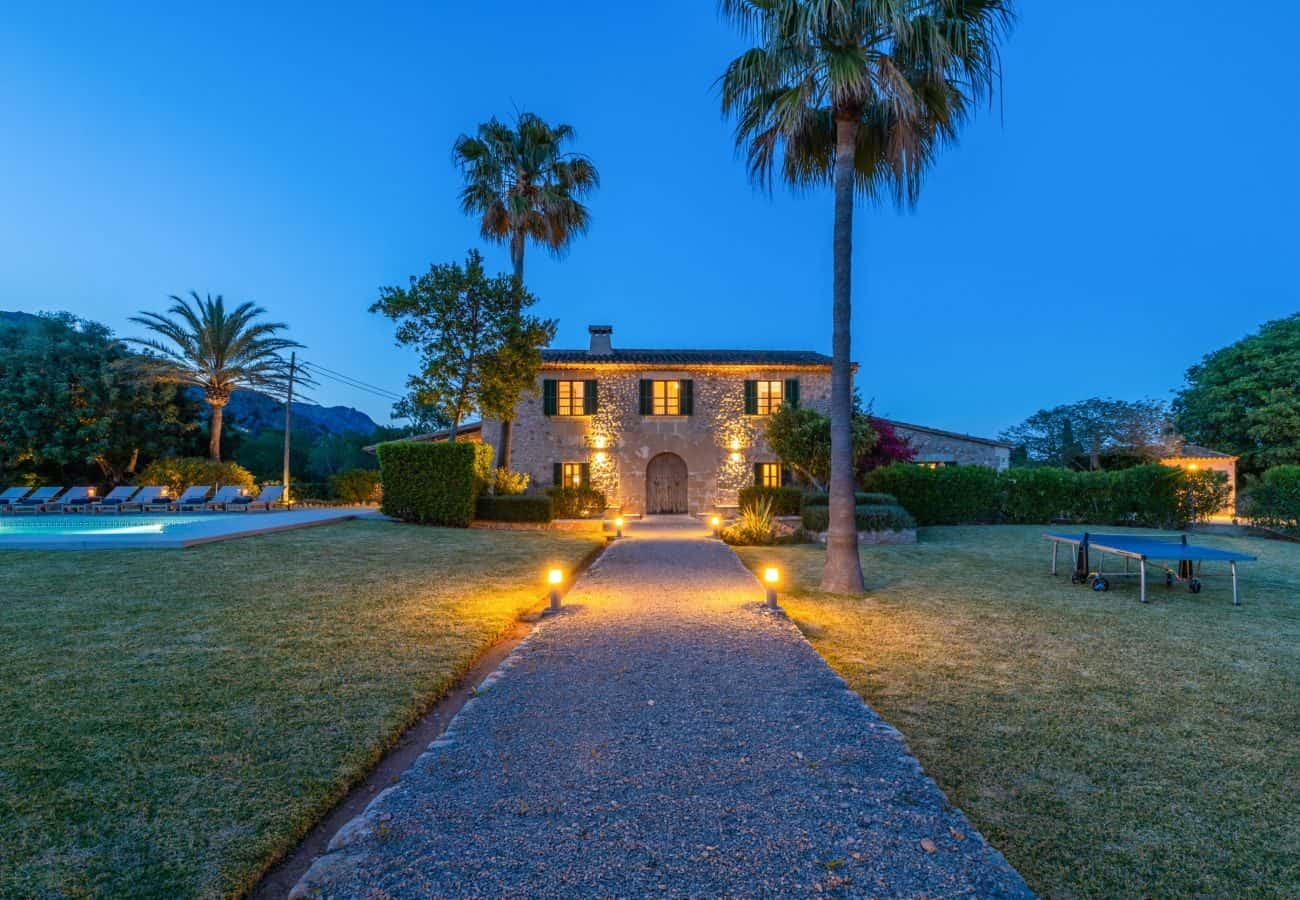
Can Corme
near Pollença (North)
- 10 guests
- 5 bedrooms
- 5 bathrooms
Registration no.: ETV/4866
per night
€1,075.64 – €2,008.40
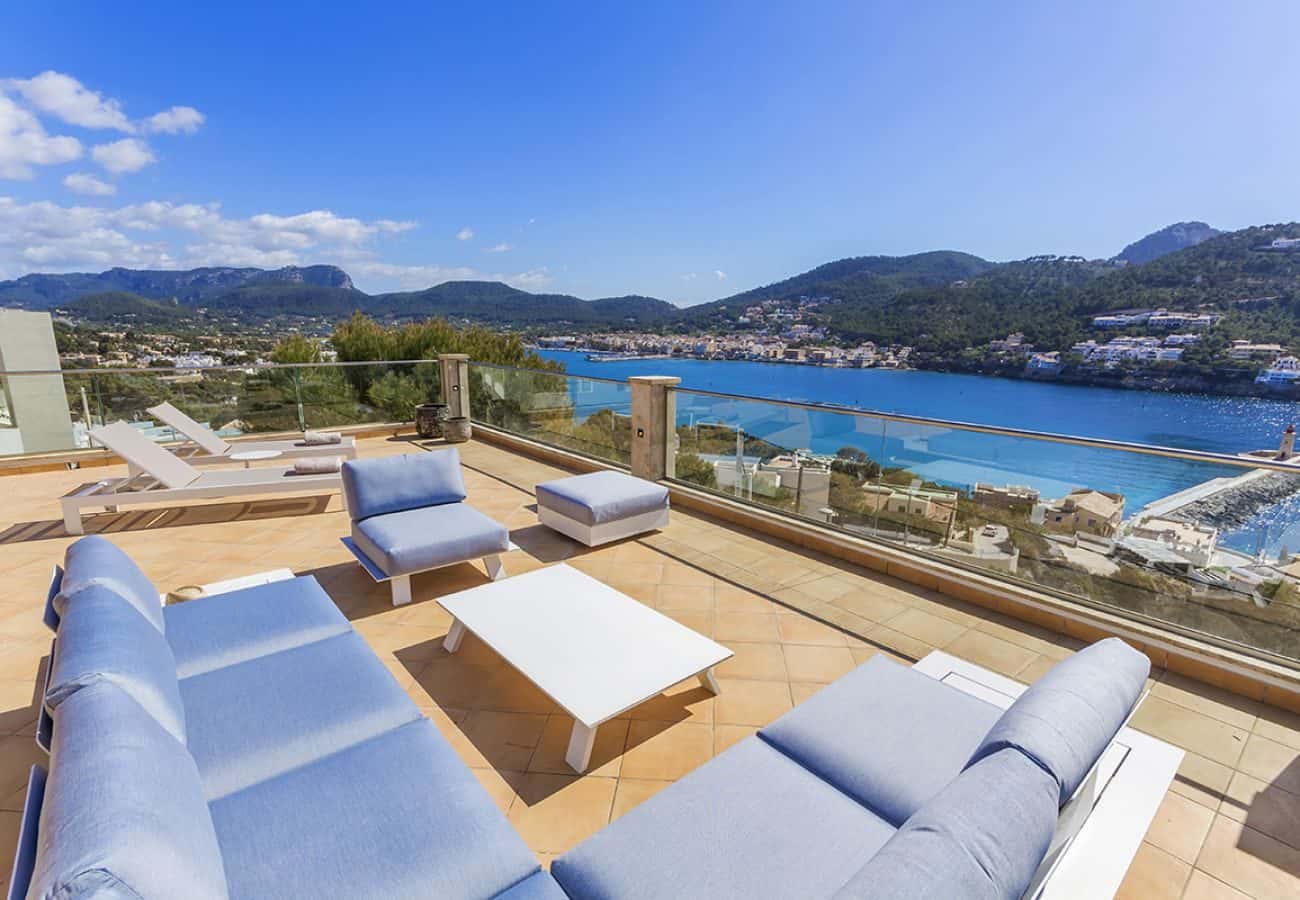
Villa Views Port Andratx
near Andratx (West)
- 7 guests
- 4 bedrooms
- 3 bathrooms
Registration no.: ETV/9286
per night
€1,176.47 – €1,848.74
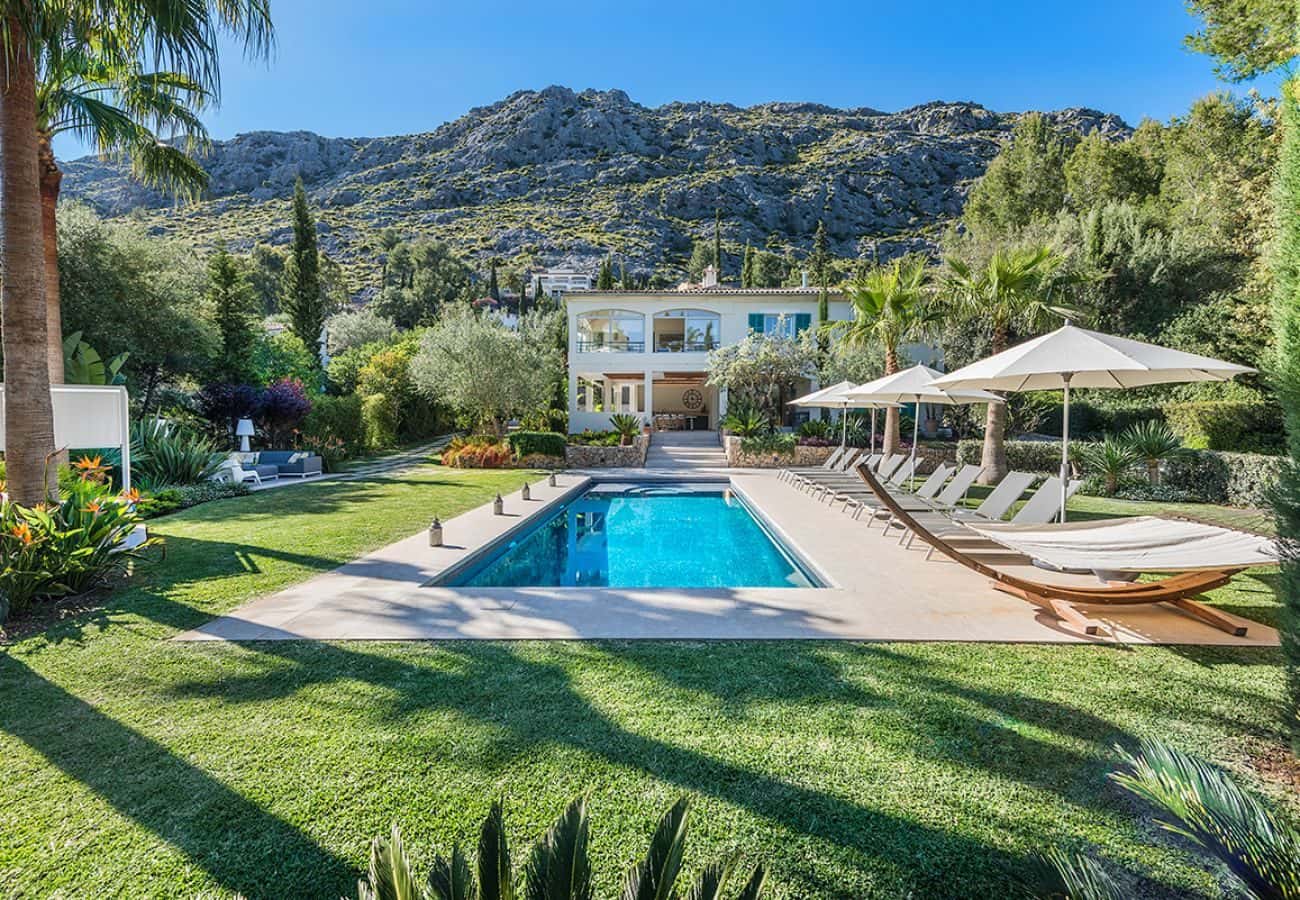
Villa Longa
near Pollença (North)
- 10 guests
- 5 bedrooms
- 5 bathrooms
Registration no.: ETV/312
per night
€1,310.93 – €1,899.16
There are currently no holiday homes listed here for Dogs welcome.
Finca in Mallorca with a dog: What this type of holiday means
A retreat away from hotel corridors and cramped balconies, where your pet can move around freely while you yourself can breathe easy: that is exactly what a finca with a dog in Mallorca is all about. Your own garden, the peace and quiet without neighbours reacting to barking, direct access outdoors instead of a leash in the stairwell – this clearly sets this type of holiday apart from a classic beach holiday, where the dog often remains a mere side issue. Important to know: on Mallorcan beaches, dogs are generally prohibited during the high season. Violations are punished with a fine, except at designated dog beaches. Those who still want to take their pet to the sea regularly can find such exception areas on the island.
In terms of timing, it is worth looking at the cooler season, because at Playa de Muro dogs are allowed on the beach from 1 November to 28 February. Such time windows greatly expand the possibilities for walks together, especially when the finca itself is not directly by the sea and you want to be out and about anyway. Outdoors on the property, however, many dogs care more about things other than the beach: smells in the undergrowth, a shady spot beneath the pergola, the rustling of lizards in the dry-stone walls.
Both the journey there and later excursions can also be planned in a dog-friendly way. Among the island's public transport options, only a few bus routes explicitly allow dogs. This is practical for day trips without a rental car. Those who combine these freedoms with the peace and quiet of their own finca get a holiday that feels less like a compromise and more like a shared adventure.
Landscapes and places as recommendations
Anyone looking to rent a finca with a dog in Mallorca has a choice of landscapes, as the island varies from region to region. In the north lies Pollença, from where Playa de Llenaire in Port de Pollença can be reached as an excursion destination – a stretch of beach whose access rules for dogs you should clarify separately before planning your day trip around it. In the west lies Sóller with its well-known valley between the mountains. The town has a life of its own and is well suited as a scenic backdrop for a finca holiday. Both places are suitable as a geographical setting, without implying specific dog access to the beach or town centre.
Those who prefer it quieter than on the coast will find an alternative to a beachside holiday in the island's interior. Selva is part of the central island region and lies on the edge of the mountains, while Sencelles also belongs to the central island region and is located in the heart of the rural interior. For anyone who prefers to travel with a dog away from busy coastal towns, these two locations can serve as a base, without implying specific beach or hiking access for dogs.
The south of the island includes Campos and Llucmajor in the southern region, as well as Santanyí, which is suitable as a setting for excursions thanks to its towns and coastal scenery – here too, dog access to specific beaches is not automatically included, but must be considered separately. Those who prefer to explore Palma itself will find Cappuccino Gran Café there, a place considered dog-friendly – a small element for days when the finca becomes a place to rest between city strolls and country air.
Seasons and weather for this topic
Anyone looking for a holiday home in Mallorca with a dog is best advised to keep their four-legged friend's heat tolerance in mind, not just their own holiday wishes. The Easter holidays or autumn holidays are considered particularly suitable times to travel with a dog because there is no heat to strain paws and circulation. In high summer, however, hot asphalt and heated sand pose a real risk of injury to dogs' paws, making long walks at midday a bad idea. Spring and autumn bring pleasant daytime temperatures of 18 to 27 degrees, making them the island's best hiking season.
The Serra de Tramuntana is at its most inviting in spring and autumn, when the light and temperature are ideal for extended outings with a dog. Those who prefer things quieter will find the island's most peaceful travel period between December and February, with noticeably less bustle on trails and in towns. Winter remains milder than on the Spanish mainland and is well suited to sightseeing, culture and hikes in moderate temperatures, even if a sweater is useful on some days.
In Capdepera, Andratx and Pollença, dogs have unrestricted access to the beaches during the winter months, a detail that pays off when choosing a region if the dog is also meant to go into the water. Travelling in November, February or March also offers lower demand and more affordable deals, a plus for anyone who wants to enjoy their finca without bustle all around them.
Amenities and key questions
A pool in front of the terrace is standard equipment at most holiday properties in Mallorca, but it is worth taking a look at the fencing and access before your four-legged friend heads to the water for the first time. Those arriving in May will often find the water still fresh, well suited to first jumps and quiet hours by the pool. The size and layout of the houses vary considerably: Finca Sa Marina in Alcúdia has around 135 square metres, while Finca Varitx Paradise in Pollença is significantly more spacious at 600 square metres and offers room for up to 20 people. With such differences, it is worth taking a close look at the respective listing before deciding on a particular size.
Besides the property itself, the surroundings matter: in Selva, narrow lanes shape the village centre, and access routes and private gates must remain clear, which is relevant when manoeuvring with a car and dog transport crate. Anyone travelling there or in comparable villages in the Serra de Tramuntana should check in advance how access to the booked finca actually works. Catering while out and about can usually be arranged without difficulty: at the market in Selva, there is bread, olive oil, vegetables, cheese and cured meats from the region, ideal for spontaneous picnics after a hike with your dog.
For emergencies while out and about, it is worth looking at the region's medical infrastructure: in Santanyí, there is an orthopaedic specialist practice with radiological equipment, which can also be reassuring in the event of minor accidents during active days in the south of the island. Those choosing their holiday home there or nearby will find medical care not far away. Before booking a finca with a garden and pool, checking with the landlord about fencing, whether dogs are allowed and access rules remains the most reliable way to avoid disappointment.
Activities with a dog on land and along the coast
Anyone travelling with a dog plans beach days differently: dogs are not permitted on all of Mallorca's beaches, so it is worth checking the region's respective access rules in advance. In Artà, there is a separate period for dog access to the beaches in the low season, from 1 October to 30 April – a useful guide if you want to plan your trip around a peaceful walk on the beach. Outside these periods, hikes in the surrounding area or an outing to shaded town centres remain the more relaxed choice.
For hikes and cycling tours with a dog, the months from March to May and from September to November are ideal, when temperatures are milder and the paths are not exposed to the blazing midday sun. Those who prefer to set off early in the day or in the late afternoon protect their dog's paws and make easier progress along shaded sections. The landscape around Selva and Sencelles provides a quieter setting for such tours, away from the heavily visited coastal promenades.
The island can also be enjoyed with a dog outside the high season: the quieter period is especially suitable for hiking, culture, longer stays and relaxed weekends, rather than for a classic beach holiday. This is precisely what suits a finca holiday with a dog, when walks and small excursions shape the day instead of tightly scheduled beach programmes.
Who this type of holiday is suitable for
A finca in Mallorca with a dog is suitable for travellers who want to offer their pet more than a short pavement walk outside the hotel entrance. As accommodation with a dog, a finca is generally well suited because it offers space and opportunities to retreat that a city flat rarely provides. Anyone who has ever tried to find a quiet exercise area for an evening walk in the middle of a city hotel during peak travel season knows what this means: at such times, exercise options in city hotels are often hard to come by. This is precisely the difference that appeals to those who prefer country life to a hotel corridor.
From a health perspective, it is worth taking a look at the island before setting off. Mallorca is among the regions where leishmaniasis occurs in dogs as a Mediterranean disease, which is why protection against sand flies and a conversation with a vet before travelling are advisable. This form of holiday is therefore particularly suitable for owners who are comfortable with such precautions rather than travelling completely spontaneously. Once that has been taken care of, they can focus on more pleasant things, such as eating out: not all restaurants and cafés on the island are dog-friendly, so it pays to take a brief look at their welcome for four-legged guests before booking a table.
Families with children and a dog often find the most pleasant balance in the months of May, June or September, because the weather remains mild and the major tourist bustle subsides. September is also considered a compromise, with warm sea and a more relaxed atmosphere, which suits couples as well as families with young children. May is a good choice for active travellers and families before the main holiday season, while October is more conducive to peace and quiet, good food, markets and long walks. Those who choose one of these quieter periods will find both pet and family comfortably accommodated together.
Booking, rules and preparation
The leash requirement applies across the entire island, on beaches as well as in villages, and is not a recommendation but a firm rule. Those wishing to travel by bus or train can generally take small dogs with them on a leash. On some beaches, bringing dogs is expressly prohibited by signs, while elsewhere it is permitted for limited periods. At Camp de Mar beach, for example, permission applies only from the end of October; in Alcúdia Bay, between 1 November and 31 March. At Cala Blanca dog beach near Andratx, there is exceptionally no leash requirement, so the animals may run without a leash. However, a narrow, winding road leads there and requires some driving experience.
When travelling with your own car, there is no way around a ferry crossing, a circumstance you should firmly factor into planning a trip with a dog, along with sufficient breaks on the way. Once there, it is also worth considering the location of the accommodation: a finca away from the towns offers seclusion, open countryside and usually more spacious outdoor areas, but requires you to clarify access and road conditions in advance, especially if your vehicle has little ground clearance.
When choosing a region, medical accessibility also plays a role, especially for specialist appointments beyond everyday needs. Around Santanyí, more advanced specialist care can sometimes mean a journey all the way to Palma, a point you should factor in when planning a holiday with a dog and family so that unexpected trips do not become an obstacle. The same applies, in principle, to other quiet rural communities away from the major centres.
Frequently asked questions
May my dog run freely on Majorcan beaches?
Only on designated dog beaches, such as Cala Mesquida with its sandy beach, where dogs may run freely. On most other beaches, dogs must be kept on a leash; on some, dogs are even prohibited, as indicated by signs. Violations on regular beaches during the high season may be punished with a fine.
Are there other times for visiting the beach with a dog besides the dog beaches?
Yes, in the low season, additional beaches open to dogs, such as Playa de Muro from 1 November to 28 February and the Bay of Alcúdia from November until the end of March. In Capdepera, Andratx and Pollença, dog access is unrestricted during the winter months.
How many designated dog beaches are there on the island?
Five beaches in Mallorca are officially designated for dogs. At all of them, there is an obligation to dispose of dog waste so that the beach and surrounding area remain clean. Anyone who ignores this obligation risks a fine in some places, such as at the beach of Camp de Mar.
Can I use public transport with a dog?
Small dogs on a leash are usually allowed to travel on buses and trains. The options are more limited for larger dogs, as only a few routes take them. Before travelling, it is still worth checking the relevant rules for the desired route so that there are no surprises on the way.
What is the best time to travel for a finca holiday with a dog?
Easter holidays and autumn holidays are considered pleasant with a dog because the heat remains more moderate. In summer, hot asphalt and sand can cause injuries to the paws. Spring and autumn also offer good conditions for hiking together, with temperatures of 18 to 27 degrees.
What exactly should I look out for when booking with a dog?
Not every restaurant or café is dog-friendly, and this also varies for accommodations. Before booking, check whether dogs are explicitly allowed, what access and fencing are like, and whether the layout suits your dog. Overall, Mallorca is considered well suited for travelling with a dog.