
Finca in Pollença: Holidays between the Tramuntana and the bay
The weekly market fills up, crates of olives stand beside pickled vegetables, a vendor stacks cheeses while locals and self-caterers squeeze between the stalls. It is precisely at this moment that you feel why a finca in Pollença makes more sense than accommodation right in the old town: you are close enough to stroll through the market in the morning, yet far enough out to enjoy peace and quiet in the evening. Pollença lies inland on the edge of the Serra de Tramuntana; the sea is part of the municipality, but the town centre itself has no beach of its own. So if you want the sound of waves at breakfast, you need to drive to Port de Pollença or Cala Sant Vicenç, both of which also belong to the municipality. This very arrangement makes the place so appealing to anyone who wants to forgo neither culture nor coast, but also does not need bustle right outside the terrace door: you will not find a beach right on your doorstep or a pronounced nightlife here. Instead, you get Plaça Major, the parish church of Santa Maria as an eye-catcher, and the famous Calvary steps with their 365 steps, leading up to the chapel and on to the church of Nostra Senyora dels Àngels. The municipality also includes Port de Pollença, which lies directly on the bay and has taken on the town's maritime function, while the historic centre had already been settled long before the medieval town. It is this mix of established history, lively market life and short distances to the water that repeatedly makes a finca in this area attractive. I will take you on a tour through streets, coves and weekly market stalls, show you when it is best to go where, and explain who this stretch of countryside really suits – and who it is less suited to.
Holiday homes in Pollença
10 properties found10 Holiday rentals in Mallorca
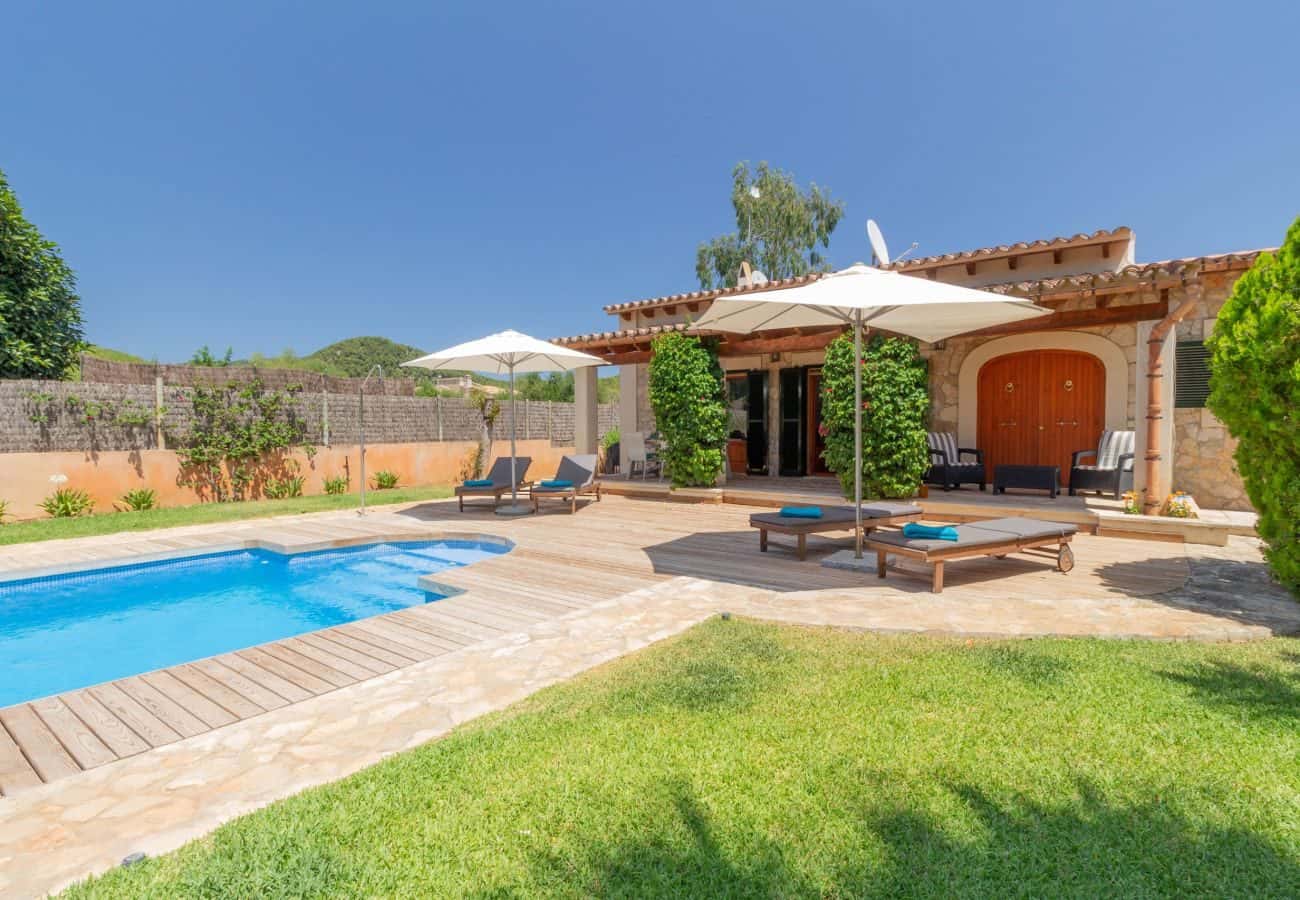
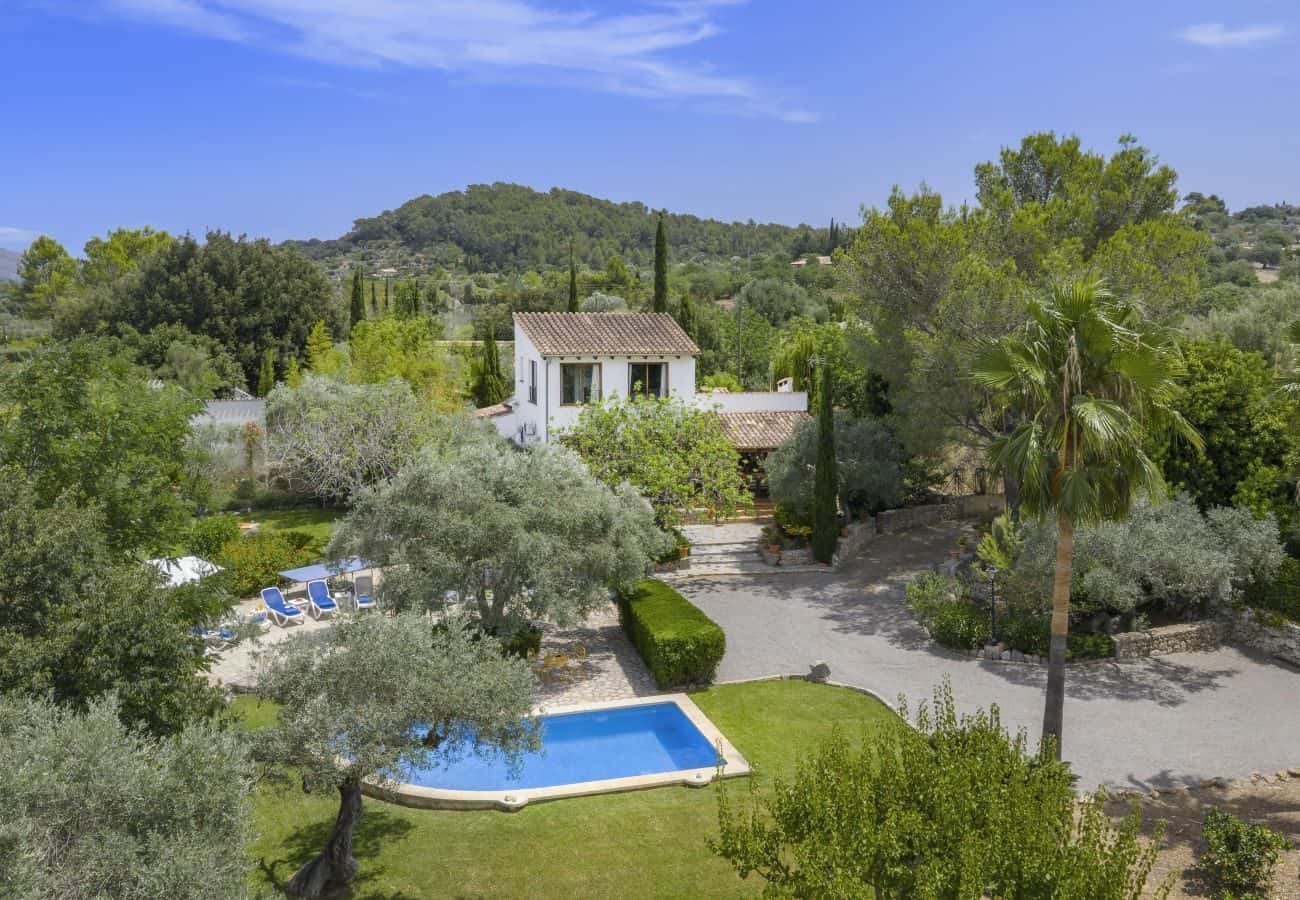
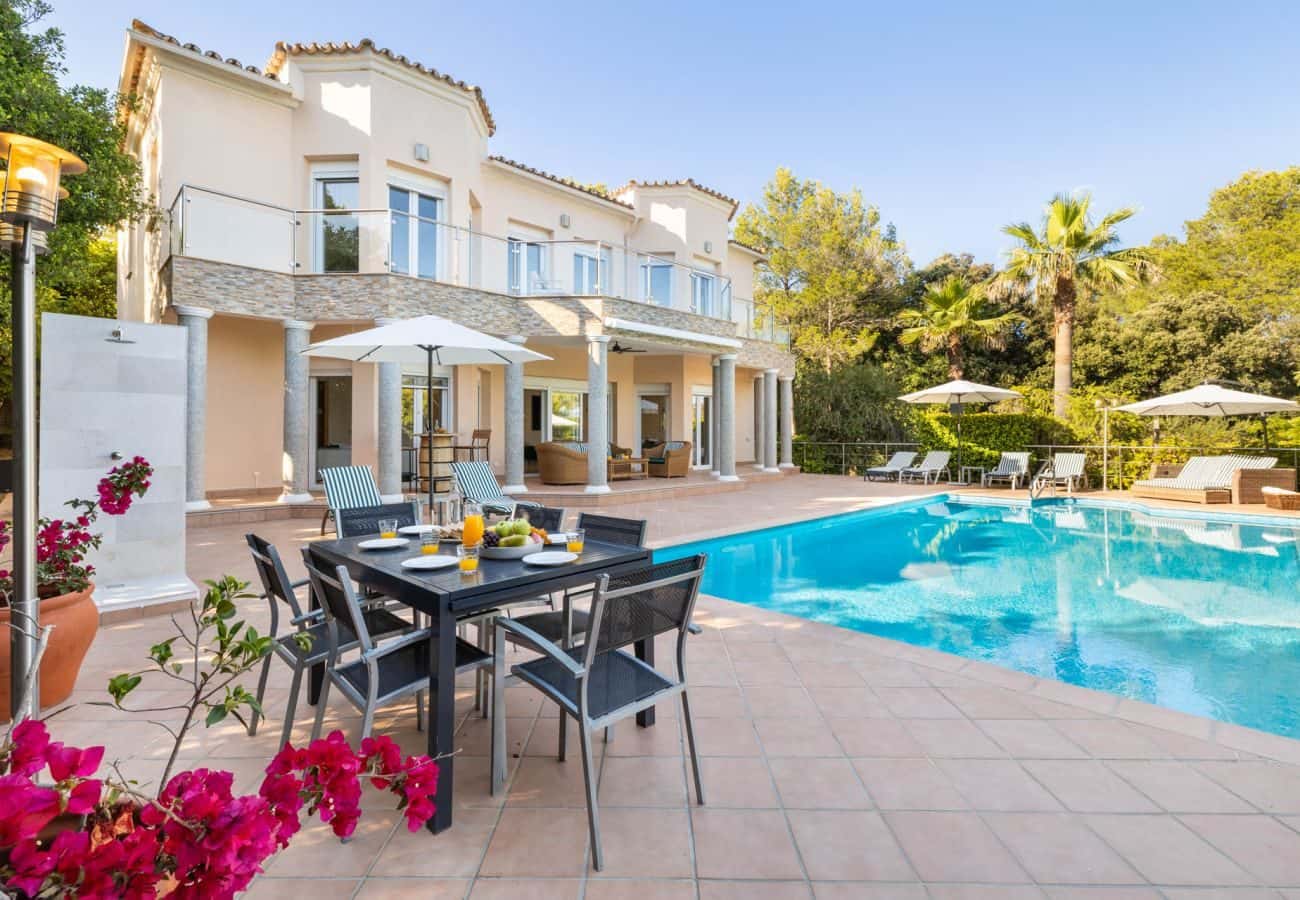
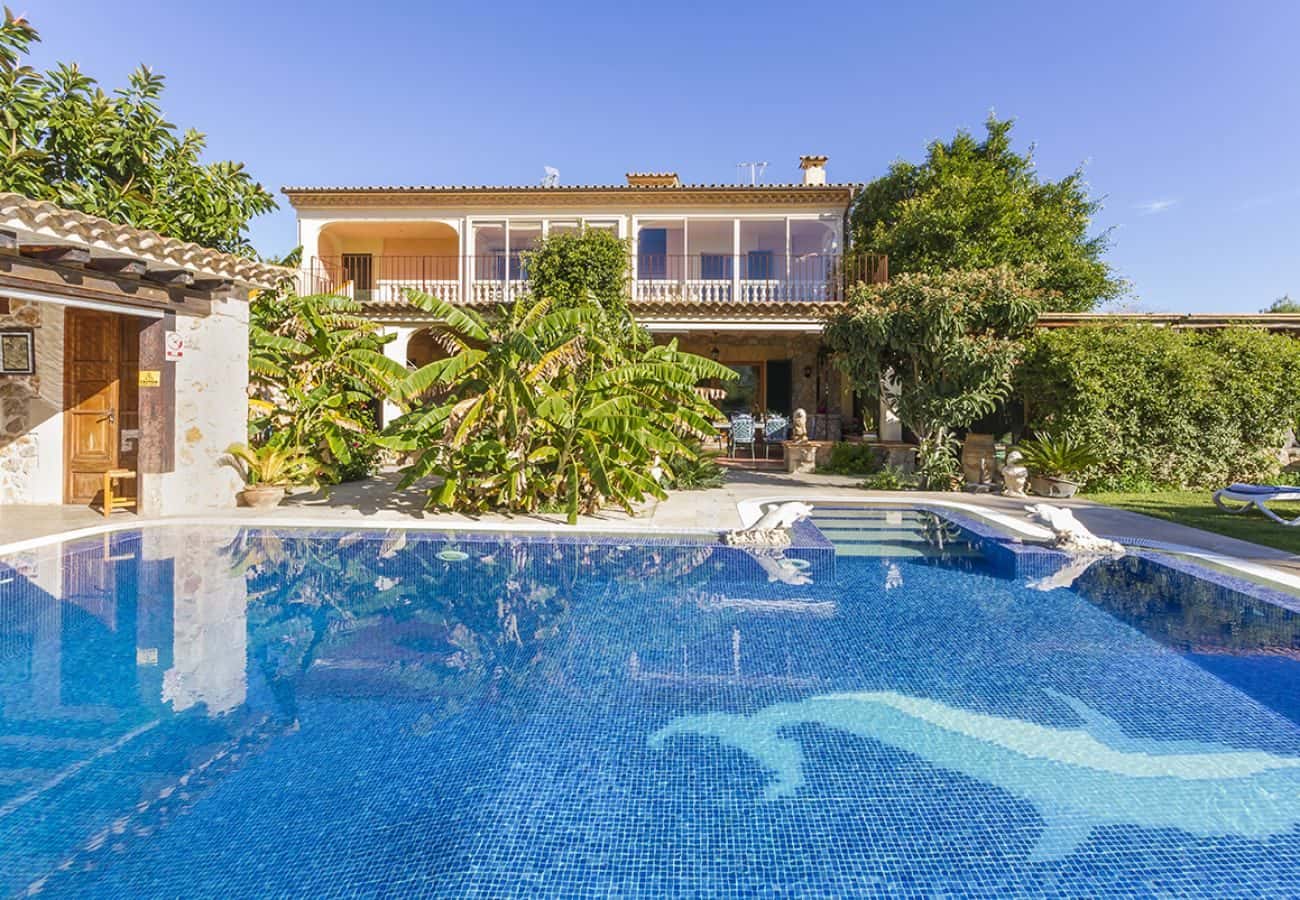
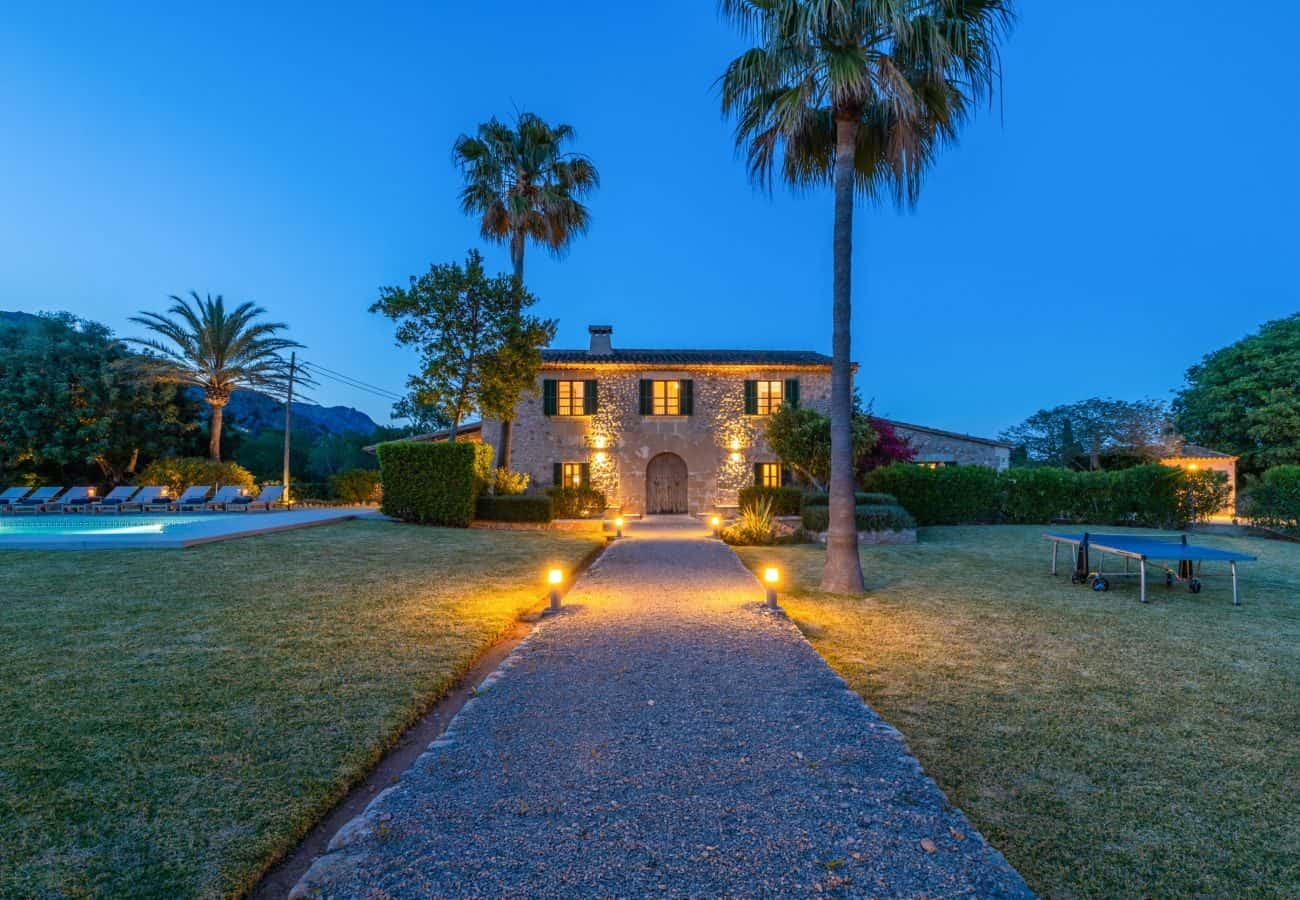
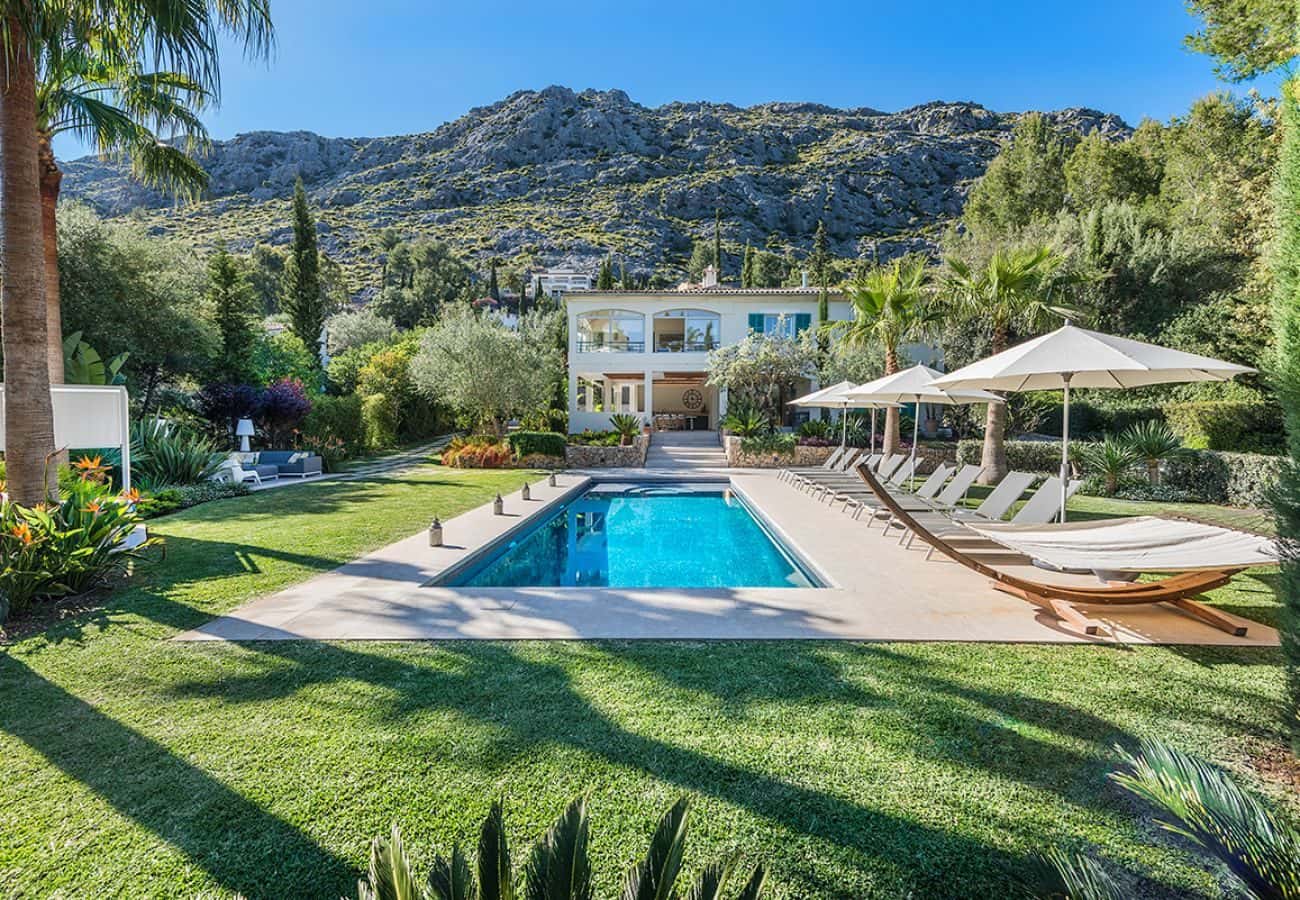
Explore fincas by theme
Pollença at a glance
Weather

21.4 °C
Sunny
Hourly forecast

20 °C
16%
20 °C
16%
18 °C
19%
20.1 °C
17%
20.2 °C
17%
18.8 °C
20%
21 °C
17%

21.5 °C
15%

21.4 °C
11%

21.5 °C
5%
21.5 °C
11%
22 °C
9%
21.4 °C
13%
21.4 °C
3%
- Next hour
21.7 °C
3%
21 °C
3%
20.6 °C
2%

19.7 °C
3%

20.8 °C
3%
21.2 °C
2%
19.1 °C
6%
21.4 °C
2%
Forecast for the coming days
Sunday
Overcast07:0917:548%22°18°Monday
Overcast07:1017:5310%22.6°18.6°Tuesday
Sunny07:1117:528%22.5°19.1°Wednesday
 Patchy rain nearby07:1217:5065%20.9°19.3°
Thursday
Patchy rain nearby07:1317:4969%20.6°18.3°Friday
Patchy rain nearby07:1417:4871%20.2°18°Saturday
Sunny07:1517:477%19.9°17.8°Sunday
Patchy rain nearby07:1617:4636%19.2°17.8°Monday
Patchy rain nearby07:1817:4440%18.1°16.1°Tuesday
Patchy rain nearby07:1917:4364%17.9°15.8°Wednesday
Partly cloudy07:2017:4257%17.7°16.3°Thursday
Patchy rain nearby07:2117:4157%17.3°16.2°Friday
Patchy rain nearby07:2217:4045%18.2°16°Saturday
Sunny07:2317:3936%19.7°15.9°
Updated: 10/25/26, 2:17 PM
Weather information without guarantee. For safety-critical decisions, consult official weather services.
Island-wide climate averages · October
Palma Airport reference station (AEMET, 1991-2020)
Sea temperature source: Puertos del Estado / Copernicus Marine Service · Bay of Palma · 2003-2022
Getting there at a glance
Palma airport
58.2 km by road · 52 min
Pollença
- Hire car or taxi
- 52 min via Ma-30 / Ma-13
- Scheduled bus
- 322 · 301 · 321 · 231
Bus lines
| Line | Route | Departures/day | First (Mon–Fri) | Last (Mon–Fri) |
|---|---|---|---|---|
| 322 | Pollença - Port d'Alcúdia | 486 | 00:08 | 23:40 |
| 301 | Port de Pollença - Palma | 186 | 06:20 | 22:37 |
| 321 | Cala de Sant Vicenç | 65 | 07:51 | 22:07 |
| 231 | Port de Sóller - Alcúdia | 8 | 10:40 | 20:20 |
From official GTFS timetable data (TIB/SFM), without real-time information. Figures count stops within 1 km in the limited timetable dataset, not trips per operating day.
Places nearby
Straight-line distance from the town centre
- Habitat · 5.2 km
- Síller (Las Palmeras) · 5.5 km
- Cala Sant Vicenç · 5.6 km
- Port de Pollença · 6.6 km
- Bellresguard · 7.7 km
- Can Singala · 7.9 km
Nearby
Straight-line distance from the town centre
Beaches
- Albercuix · 5.9 km
- Cala Moltons · 5.9 km
- Cavall D'En Borràs · 6.0 km
- Carbo · 6.0 km
- Maressar · 6.1 km
- Cala Barques (S Vicenç) · 6.1 km
Sights
- Fundació Tabaluga · 0.2 km
- Mare de Déu del Roser · 0.2 km
- Monti-sion · 0.2 km
- Museu Dionís Bennàssar · 0.2 km
- Museu Martí Vicenç · 0.2 km
- Sant Jordi · 0.3 km
Weekly markets
- Weekly Market in Pollença · Sunday · 08:00-13:00
- Weekly Market in Port de Pollença · Wednesday · 08:00-13:00
Upcoming dates
- Theatre: Cròniques d'un mig estiu - Club Pollença
Map
Your finca in Pollença between mountains and bay
Imagine sitting on the Plaça Major in the early evening, the light turning golden, and somewhere bells ringing above the rooftops. This is exactly the feeling many people mean when they dream of a holiday home in Pollença on Mallorca. The municipality lies in the north of the island, on the edge of the Serra de Tramuntana, inland from the bay that bears its name. The town centre itself is inland, not directly on the open coast, yet the sea is still part of the municipality. Those who stay in the old centre have the Plaça Major, restaurants, small shops and cultural venues practically on their doorstep, and it is precisely this proximity that makes a finca in Pollença so appealing to many.
Pollença is an independent municipality that encompasses far more than just the historic town centre. Port de Pollença, with its location directly on the bay, and Cala Sant Vicenç, a district by the sea, are also part of it. These three places belong to the same municipality, but differ greatly in character: here, the quieter inland centre with its history; there, the coastal towns with harbour charm and proximity to the beach. Anyone who stays for a while quickly notices how different a day in the centre is from a day by the water, even though only a short drive separates them.
This division is not a modern coincidence. The area of the municipality had been settled long before the medieval town emerged, and Port de Pollença later took on the maritime role that the inland centre was naturally denied. Anyone looking for a holiday home in the old centre should bear one thing in mind: accommodation on the most beautiful winding lane often involves more detours in everyday life than an apartment on the edge of the centre, where luggage and pushchairs can arrive more easily and a vehicle remains accessible without complications. My tip: if you want to enjoy the peace of the historic centre but also reach the car easily in the evening, pay close attention when choosing your finca to this location at the transition between the old town and the open road – that way, you combine the charm of the lanes with the freedom to set off comfortably at any time.
Getting there and getting around Pollença
From Palma, the Ma-13 first leads towards Inca and Alcúdia before you switch to the Ma-2200, which takes you directly into Pollença – a straightforward route that is easy to remember if you travel frequently between the finca and the town. Anyone looking to rent a finca in Pollença benefits from this clear connection: no winding shortcuts, but a road that reliably gets you to your destination. The town itself is served regionally by bus, with several stops within the town, including towards the sports complex and school – practical if you want to leave the car behind from time to time. A finca in Pollença is therefore usually close enough to this infrastructure for you to choose flexibly between driving and taking the bus.
In the town centre itself, things get tighter: the lanes around Plaça Major are narrow and densely built up, as befits an established Mallorcan town centre, and unsuitable for searching for a parking space as centrally located as possible. Once parked, you do not need to get back into the vehicle for the Calvari climb, the Church of Sant Domingo or Plaça Major itself – everything is within walking distance of one another. My tip: park on the edge of town and walk the last few minutes; it takes the rush out of the whole experience and lets you arrive more relaxed, without having to manoeuvre through tight bends.
Those wishing to continue towards the coast, for example to Cala Sant Vicenç, drive via a signposted access road that is easy to manage by car; at the end of the route, there is even a free car park at Cala Barques, from which a staircase leads down to the water. You are not cut off there by bus either; the stop is in the immediate vicinity of the bay. Those heading for the western Tramuntana should allow for slower regional and mountain roads there – compared with northern Mallorca, it is a different pace, inviting you to linger rather than rush through. This route is particularly relaxed to drive on quieter weekday mornings, before traffic increases on the roads in the afternoon.
Beaches within reach of your finca
Those who choose a holiday apartment in Pollença stay inland – the sea may belong to the municipality, but it takes a few minutes' drive to reach the sand. The two main nearby options are the coastal town with its beach, promenade, harbour and water sports on the large bay, and the smaller Cala Sant Vicenç bay. Both are considered the obvious choices when you want to go to the beach with children, and both feel very different – the coastal town spacious and lively, the bay more intimate and framed by rocks.
Several small coves lie close together in Cala Sant Vicenç itself. Cala Barques attracts many beachgoers due to its central location, aided by its dining options and beach service; according to older information, its facilities included fine sand, sunbed and parasol hire, and a seasonal lifeguard service. Cala Clara next to it is smaller and rockier, with a surface of sand and pebbles, and quickly becomes cramped when busy – more of a second choice for a quiet family day with toddlers. Cala Molins, meanwhile, scores with fine sand, crystal-clear water and a shallow, sandy entry into the sea that is especially pleasant for cautious swimmers.
My tip: If you are looking for peace and quiet, set off early in the morning while the parking spaces at Cala Barques – where a free car park is available at the end of the access road – are not yet full, as beachside spaces around Cala Sant Vicenç become noticeably scarce in high season. If you prefer space and infrastructure instead, the beach, harbour and promenade close to the Bay of Pollença offer the more relaxed alternative for a whole day with a towel, ice cream and a stroll. Either way: Coming back to the quiet terrace of your finca after a day at the beach, while the scent of salt still lingers on your skin, is exactly the kind of balance this region does so well.
Routes through Pollença's old town and monastery hills
Anyone exploring the old town hardly needs a car: the main sights are so close together that everything can easily be reached on foot. In Plaça Major, you will find the parish church of Santa Maria, which serves as a landmark for any walk. From there, stroll on to the former Sant Domingo monastery, which now houses the Museu de Pollença, and to the Museu Dionís Bennàssar, another museum with its own character. The Roman bridge is also among the stops that can be easily strung together on such a wander.
Those looking for something more active should head for the Calvary steps: 365 steps lead from Carrer del Calvari up to the chapel at the top and on to the church of Nostra Senyora dels Àngels. The cobblestones, steps and incline make the ascent only partly suitable for people with limited mobility, and access to the viewpoint is also limited with a pushchair. My tip: go early in the morning, before the sun rises above the rooftops – then the steps remain pleasantly shaded, and you will have the view almost to yourself.
If you have a little more time, you should not miss Puig de Maria: at an altitude of 333 metres stands a monastery whose origins date back to the 15th century. The path up requires a certain level of fitness, but rewards you with a sweeping view across the plain to the bay – a destination for a peaceful afternoon, after which you can put your feet up in peace at your finca after the descent.
Market Day and Shopping in Pollença
On Mondays and Friday mornings, Plaça Major is transformed into a maze of stalls stretching all the way to Plaça de les Monnares. Crates of fruit and vegetables stand alongside cheese, cold cuts, olives, oil, wine and pickled delicacies, and those who taste carefully will keep discovering sobrasada, the island’s hearty sausage, among them. The market thrives on this mix of regional produce and a broad range of goods for visitors, which is why day-trippers, locals and self-caterers alike make their way through the lanes.
Among the delicatessen stalls, ceramics, woven baskets, embroidered textiles, plants, clothing, shoes, household goods and souvenirs also await buyers, although not every stall actually offers traditional island handicrafts – some goods are more like interchangeable holiday merchandise. Those who prefer a quieter experience are best off turning into one of the side streets away from the main thoroughfare rather than simply letting themselves drift along the busy Plaça Major; these often contain the more craft-oriented corners with less crowding.
For everyday needs beyond the weekly market, the town offers supermarkets, grocery stores, restaurants and retail shops, so supplies at the finca can be replenished without any major excursion. Compared with Palma, the selection feels more small-scale and manageable, giving shopping a pleasantly village-like character. Anyone considering moving here permanently should, however, think beyond the summer cafés and lively market bustle and ask how well everyday errands and social life hold up outside the season. For a few weeks of finca holiday, though, this very mix of market buzz and quiet daily life is a gift – and reason enough to firmly mark the next weekly market in the calendar.
Who Pollença is really suitable for
Anyone looking to be active is well advised to choose a finca in Pollença: the town serves as a base for hikers, with food and accommodation right in the town area, from where rural routes branch off into the Tramuntana. In the centre itself, cobblestones, narrow lanes and pedestrian traffic slow down any pace, which is why the old town is better suited to strolling and market visits than to brisk bike rides. For longer cycling stages, it is more worthwhile to look at routes outside the town centre. A finca puts you in exactly this position: close enough to the mountains to set off early, and close enough to town to enjoy a relaxed meal out in the evening.
For families, the nearby coves are more worth considering than the old town itself. Cala Molins is described in visitor reports as family-friendly, with lifeguards present, while Cala Barques is really suitable for children only when the sea is calm. Anyone travelling with a pushchair or with limited mobility should rather avoid Cala Clara: the final stretch there leads over stairs, and the beach area is small and often busy. My tip: families with small children should go to Cala Molins in the morning, when the beach still has room to play, and save the rockier coves for a quiet afternoon without a pushchair.
Anyone planning longer tours in the Tramuntana cannot do without proper equipment: sturdy shoes, sufficient water and seasonally appropriate planning are simply essential, especially during the hot summer months. This very combination of mountain hiking in the morning, an afternoon at the beach with the children and a quiet evening on the terrace is what makes a finca in this area so appealing.
Practicalities for everyday life and getting around locally
Anyone wishing to live in the historic centre of Pollença should keep cobblestones, slopes and narrow pedestrian areas in mind – for people with limited mobility, these are no small matters. Everyday life without a car still usually works well in the town centre, provided the location of the accommodation is suitable. Those who prefer level ground and short routes without cobblestones would do well to consider this when choosing a room. A winding lane full of charm often involves more effort in daily life than accommodation on the edge of the centre, where access is easier and a vehicle remains more conveniently reachable.
Using a bicycle is hardly worthwhile in the old town: cobblestones, narrow lanes and dense pedestrian traffic slow every pace there. Those with sporting ambitions will find much quieter routes outside the town centre. For hikes into the Tramuntana Mountains, sturdy shoes, sufficient water and planning adapted to the season belong in your pack, especially for longer tours in the warmer months. This division runs through everyday life locally: the historic centre thrives on a leisurely strolling pace, while the municipality's more strongly seasonal coastal towns set their own rhythm by the water.
Anyone travelling with a dog should keep an eye on the current signage at Es Carbó, as the regulations change depending on the season. This small advance check saves unnecessary detours on holiday mornings and instead gives you more time for a calm start to the day – just as one would wish for from the terrace of a finca in this area.
Frequently asked questions
Is Pollença located directly by the sea?
No, the historic town centre lies inland on the edge of the Serra de Tramuntana, without its own beach on the doorstep. However, the municipality of the same name includes Port de Pollença directly on the bay as well as Cala Sant Vicenç. Those who want both can stay in the centre and simply head over for a day at the beach.
What is the best way to get to Pollença by car?
Via the Ma-13, you can reach the north of Mallorca from Palma, heading towards Inca and Alcúdia; from there, the Ma-2200 continues to Pollença. Within the old town, you will find narrow streets that are not well suited to looking for central parking – it is better to park on the outskirts and explore the sights on foot.
Are there public bus connections in the town?
Yes, Pollença is served by regional buses, with several stops distributed throughout the town, including towards the sports facility and school as well as at two central points. Cala Sant Vicenç has a stop in the immediate vicinity. You will usually cover the last stretch to your accommodation on foot.
How strenuous is the climb to the Calvary Chapel?
The path leads up 365 steps to the chapel at the top of the staircase and continues to the church of Nostra Senyora dels Àngels. Cobblestones, steps and gradients make the route only partially suitable for strollers and people with limited mobility. Sturdy shoes and a bit of fitness will help you enjoy the view at the top at your leisure.
When does the weekly market take place in Pollença and what is available there?
The market extends across Plaça Major and the adjacent streets as far as Plaça de les Monnares. Alongside fruit, vegetables, cheese, cold cuts and sobrasada, you will find ceramics, baskets, embroidered textiles and souvenirs. The mix caters both to locals and self-caterers as well as day-trippers; not every stall offers traditional island handicrafts.
Which nearby beaches are suitable for a family day out?
According to a visitor report, Cala Molins is considered family-friendly, with lifeguards on duty. Cala Barques scores points with fine sand, sun lounger and umbrella rental, as well as food options, but is only truly relaxing for families when it is not too crowded and the sea is calm. Cala Clara, on the other hand, has stairs and a small beach area, which is impractical for strollers.