
Finca in the centre of Mallorca: villages, markets and quiet countryside
No sooner has the farmer next to you set down the crate of aubergines than the next load of tomatoes and olives is already passing over the table at the neighbouring stall, while somewhere between the stalls the scent of bread wafts through the lanes. This is how a market day begins in Sineu, surrounded by handicrafts, ceramics, baked goods, paprika sausage and an agriculture-focused livestock section that sets this market apart from others on the island. Scenes like these explain precisely why a finca in the centre of Mallorca offers more than a quiet base between two beaches: island life pulses here, governed not by the season but by market days and the rhythm of fieldwork. From your finca, this centre of the island is within reach, with the Convent de la Immaculada Concepció monastery above a former Moorish fortification in Sineu, the Castell d'Alaró castle ruins as a once hard-to-reach refuge, and places with their own history such as Inca, once a centre of leather goods production, or Alaró, with traces of settlement dating back to the Talayotic period. The landscape alternates between gentle hills, rows of almond trees and the broad plain that the Mallorcans call Es Pla. It is precisely this blend of openness and proximity that makes the difference: close to Palma yet far from the bustle of the coast, nestled among villages that live from agriculture and craftsmanship rather than sun loungers. Those who get up early in the morning experience market stalls filling up for locals, not for cameras. Those who prefer to sleep in find quiet lanes in the afternoon, where time seems to pass noticeably more slowly. A finca as a base gives you the freedom to discover all this at your own pace without having to forgo peace and quiet.
We currently have no accommodation in Island centre
These properties across Mallorca may suit you.
11 properties found11 Holiday rentals in Mallorca
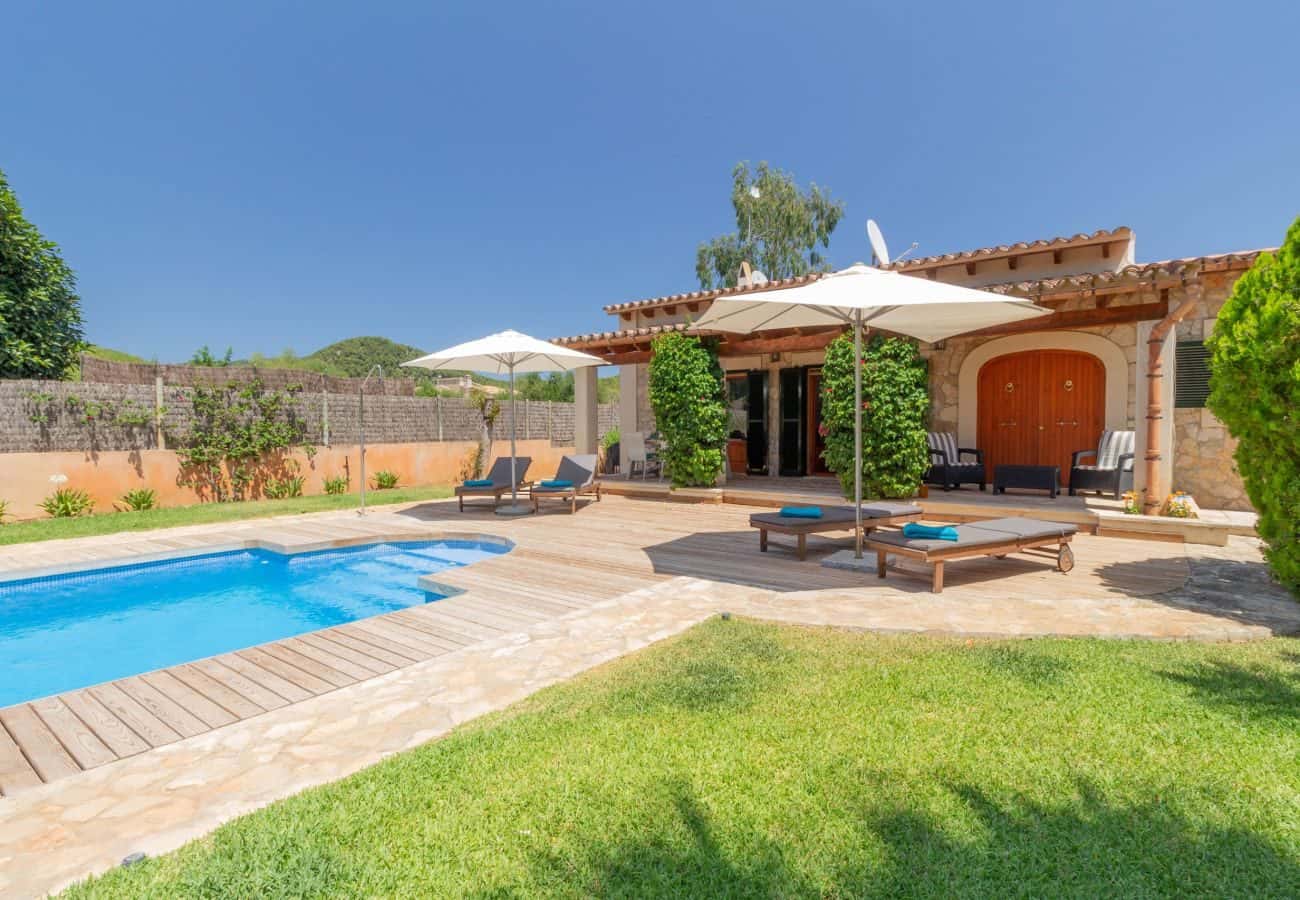
Vista Verde
near Pollença (North)
- 6 guests
- 3 bedrooms
- 3 bathrooms
Registration no.: ETV/4875
per night
€221.14 – €574.96
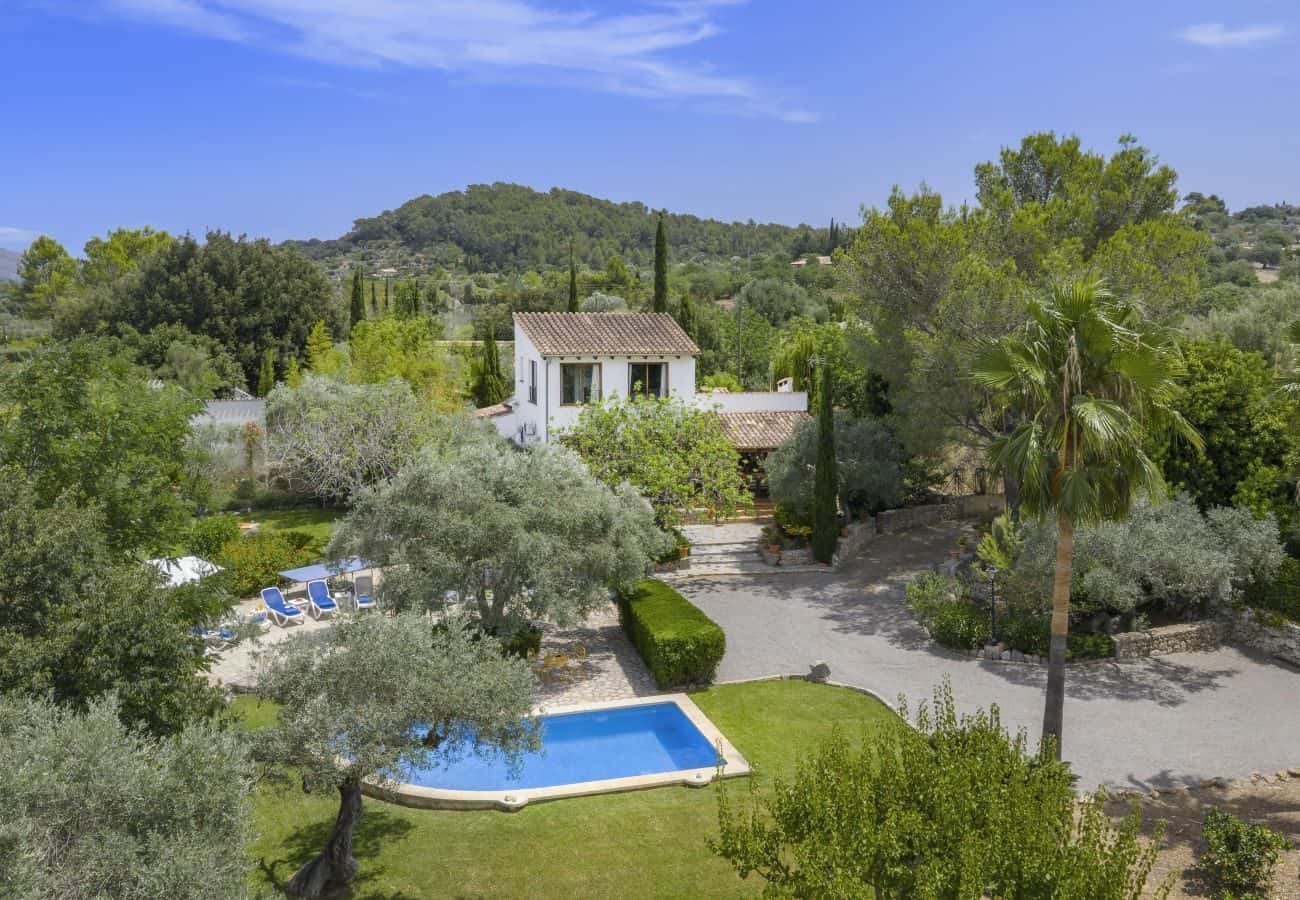
Cal Perdiu Vell
near Pollença (North)
- 6 guests
- 3 bedrooms
- 3 bathrooms
Registration no.: ETV/8616
per night
€252.11 – €671.42
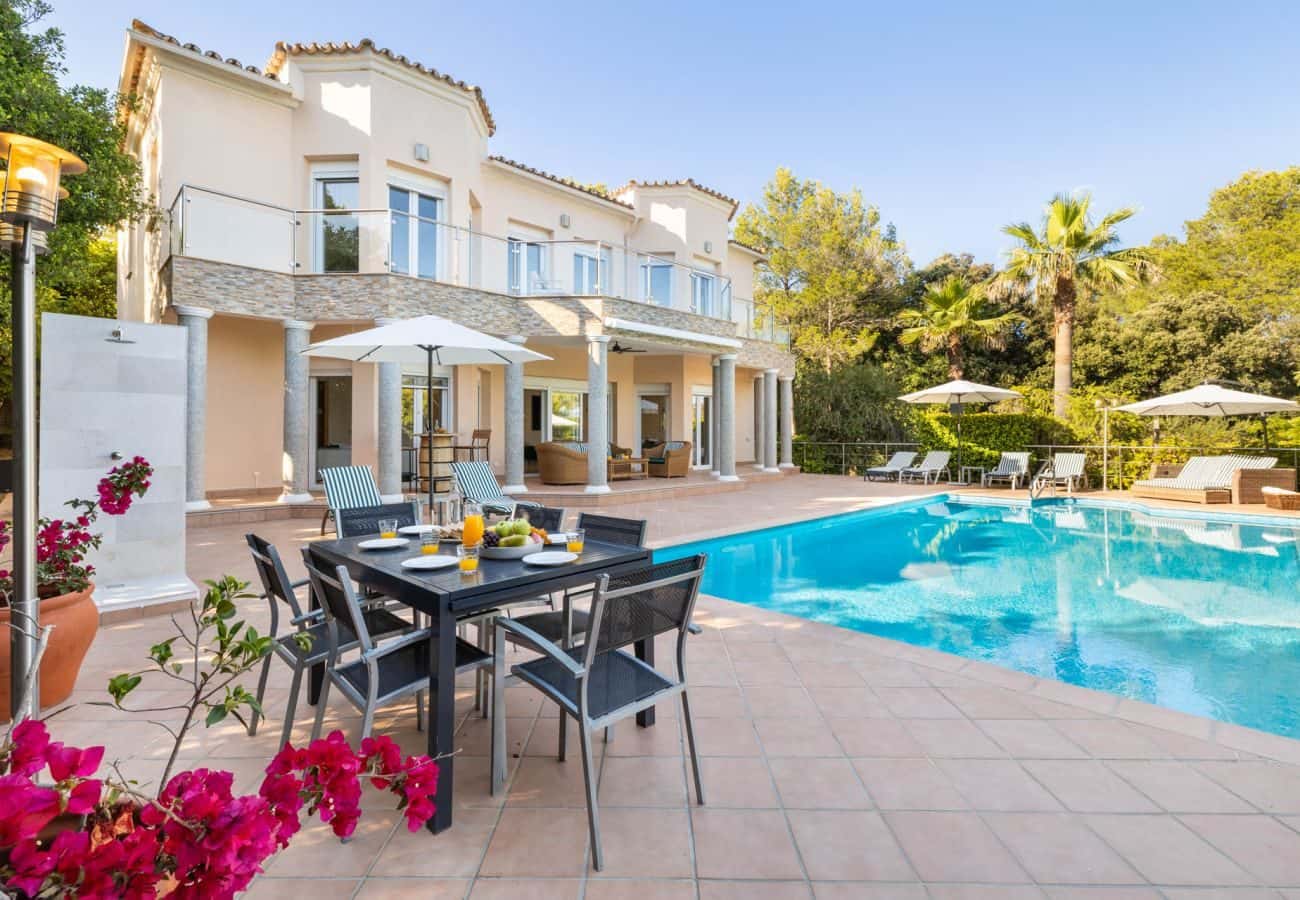
Villa Verde Subach
near Pollença (North)
- 8 guests
- 4 bedrooms
- 5 bathrooms
Registration no.: ETV/10057
per night
€336.13 – €886.55
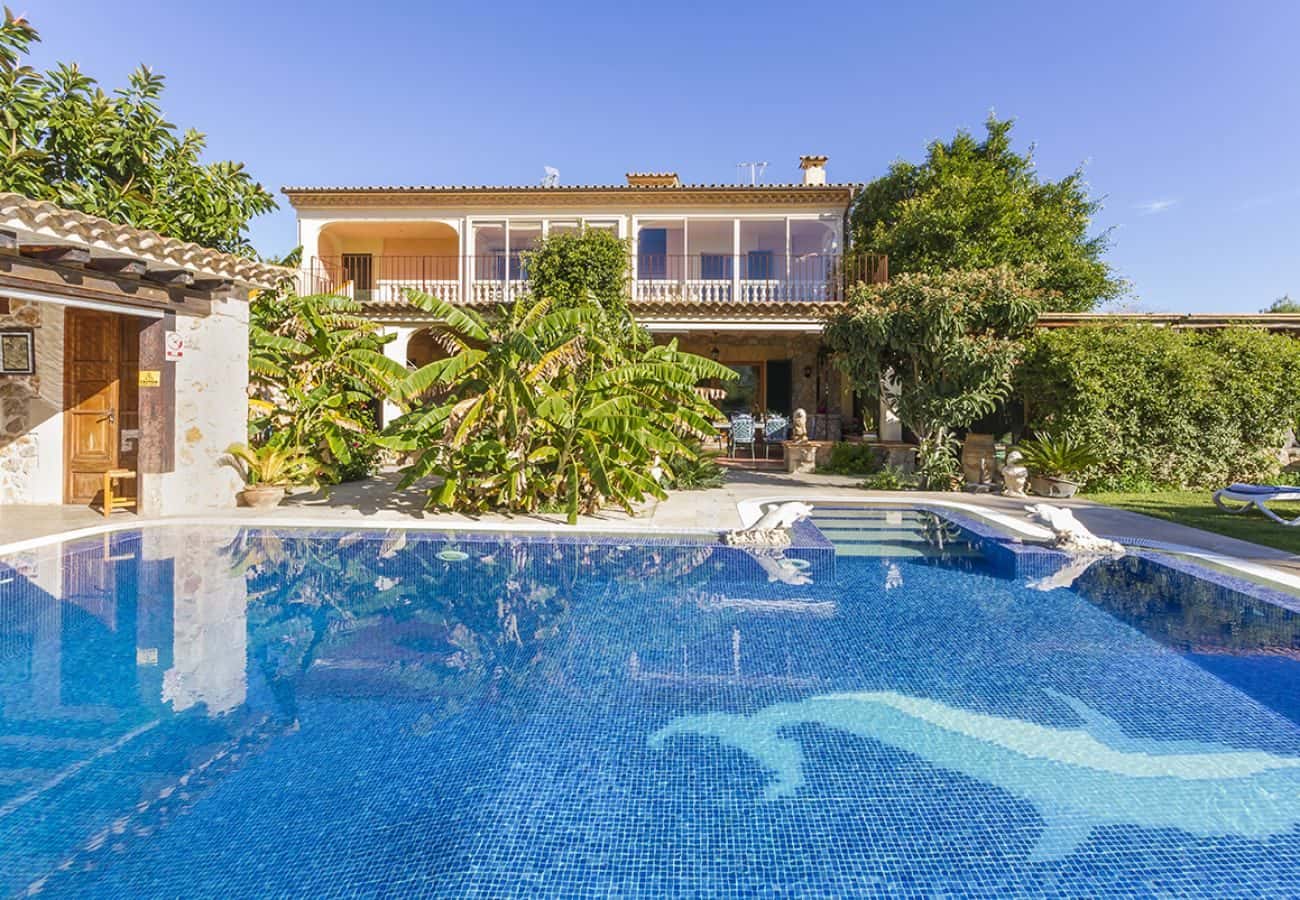
Can Josep
near Pollença (North)
- 8 guests
- 4 bedrooms
- 4 bathrooms
Registration no.: ETV/2445
per night
€423.98 – €878.25
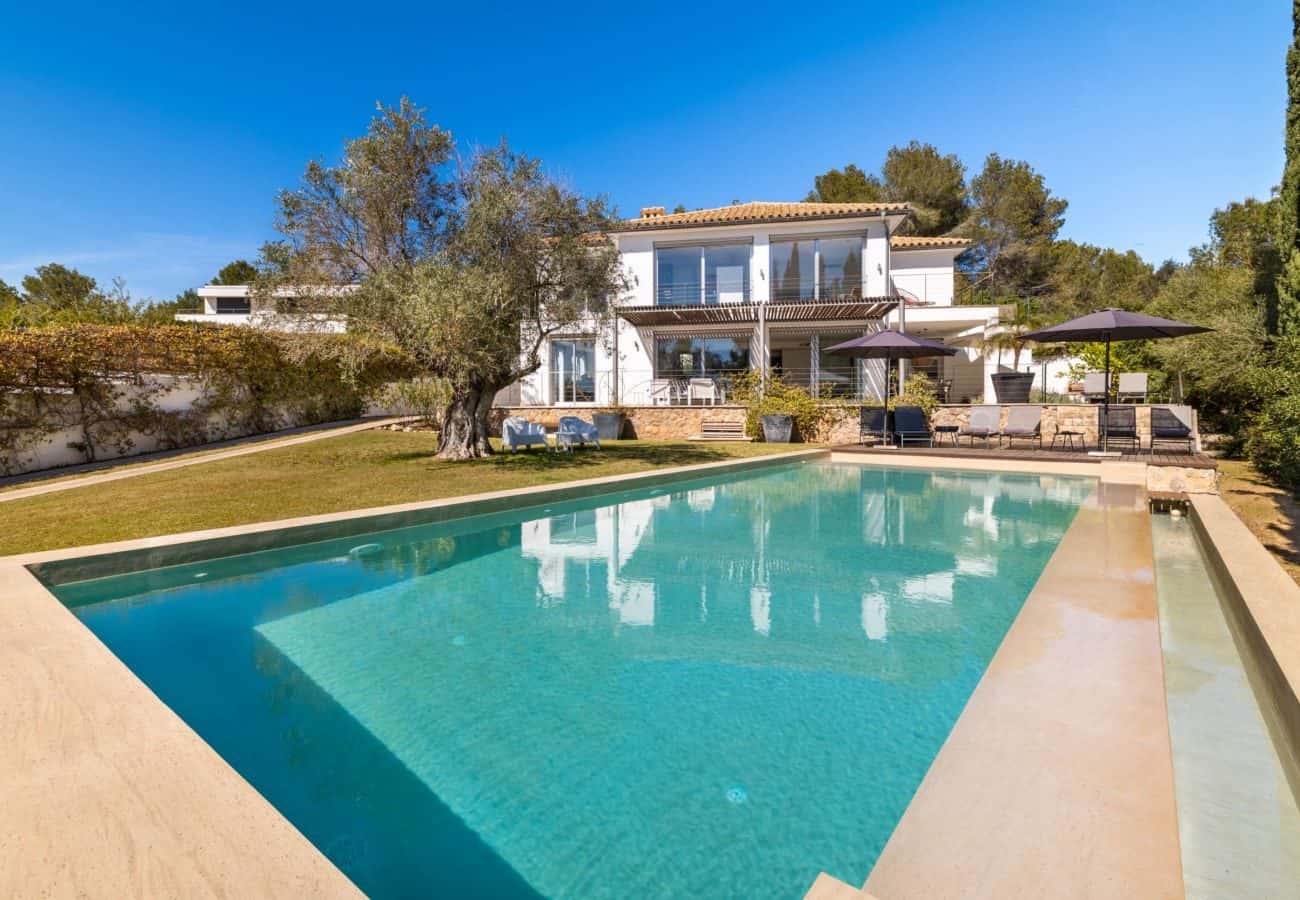
Villa Vista
near Pollença (North)
- 8 guests
- 4 bedrooms
- 4 bathrooms
Registration no.: ETV/10049
per night
€450.42 – €1,029.41
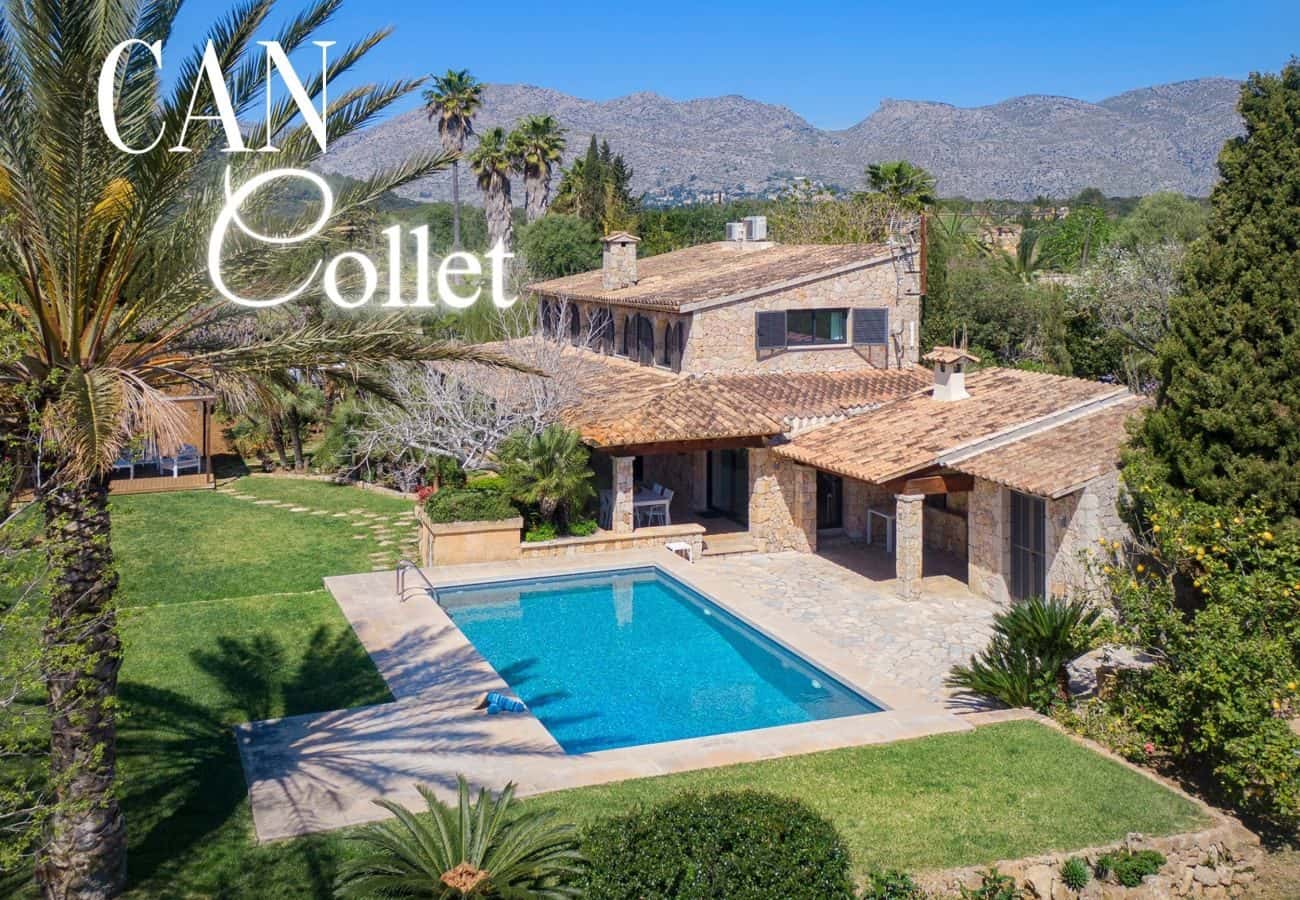
Can Collet
near Pollença (North)
- 6 guests
- 3 bedrooms
- 2 bathrooms
Registration no.: ETV/11408
per night
€478.99 – €1,260.51
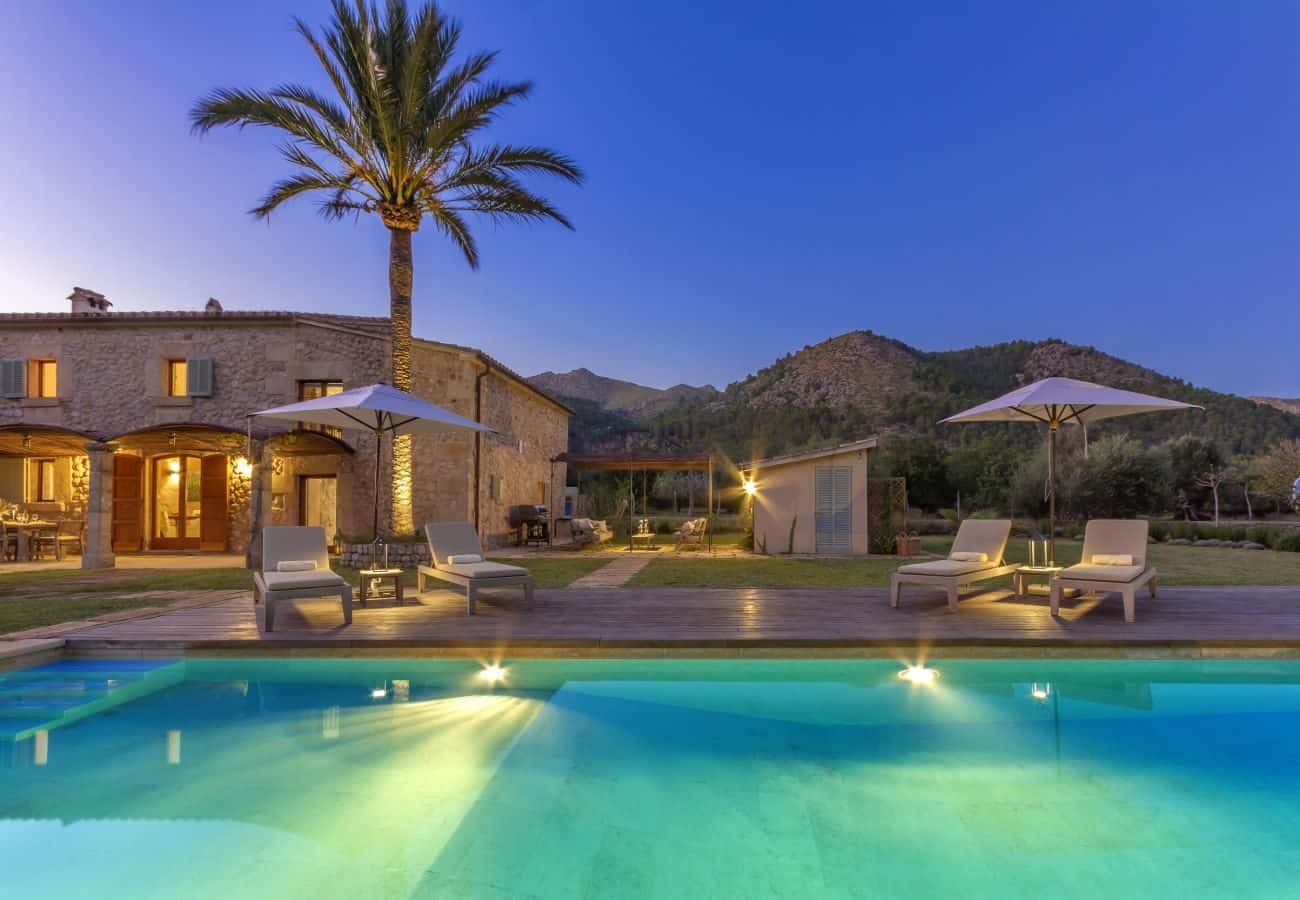
Can Pau
near Pollença (North)
- 8 guests
- 4 bedrooms
- 4 bathrooms
Registration no.: ETV/11866
per night
€533.61 – €1,260.51
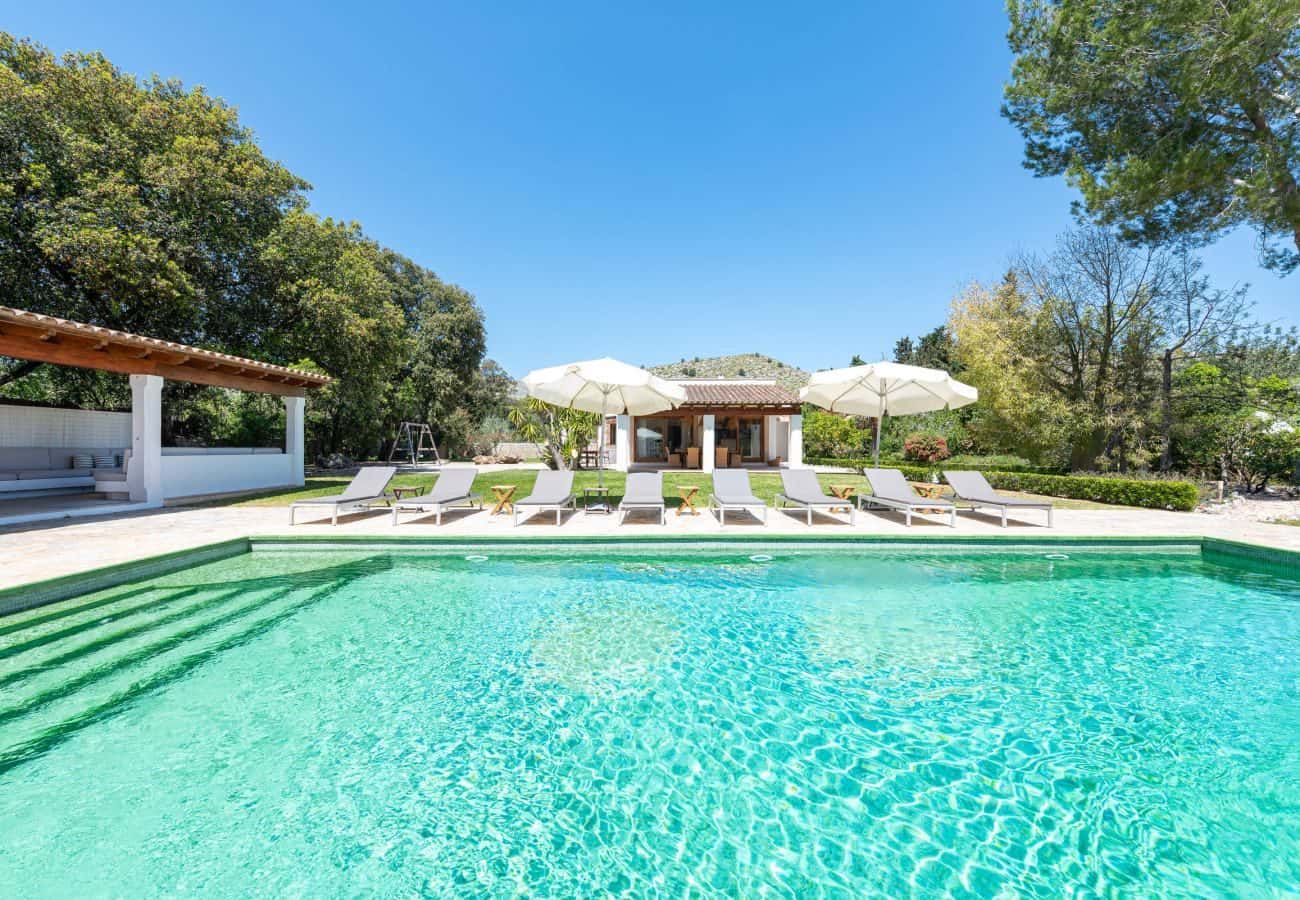
Cal Rei Gran
near Pollença (North)
- 12 guests
- 5 bedrooms
- 5 bathrooms
Registration no.: ETV/2637
per night
€714.28 – €1,806.72
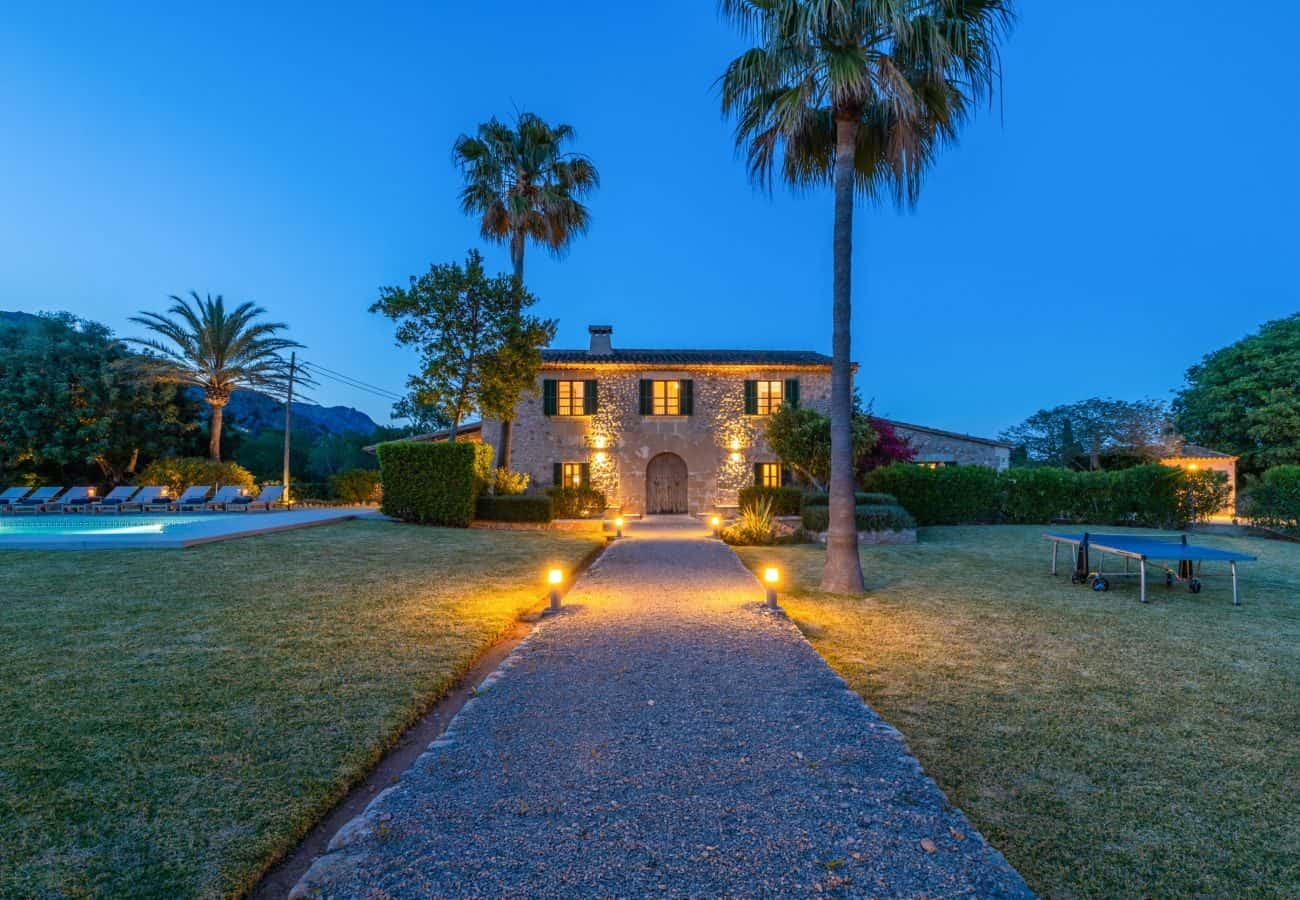
Can Corme
near Pollença (North)
- 10 guests
- 5 bedrooms
- 5 bathrooms
Registration no.: ETV/4866
per night
€1,075.64 – €2,008.40
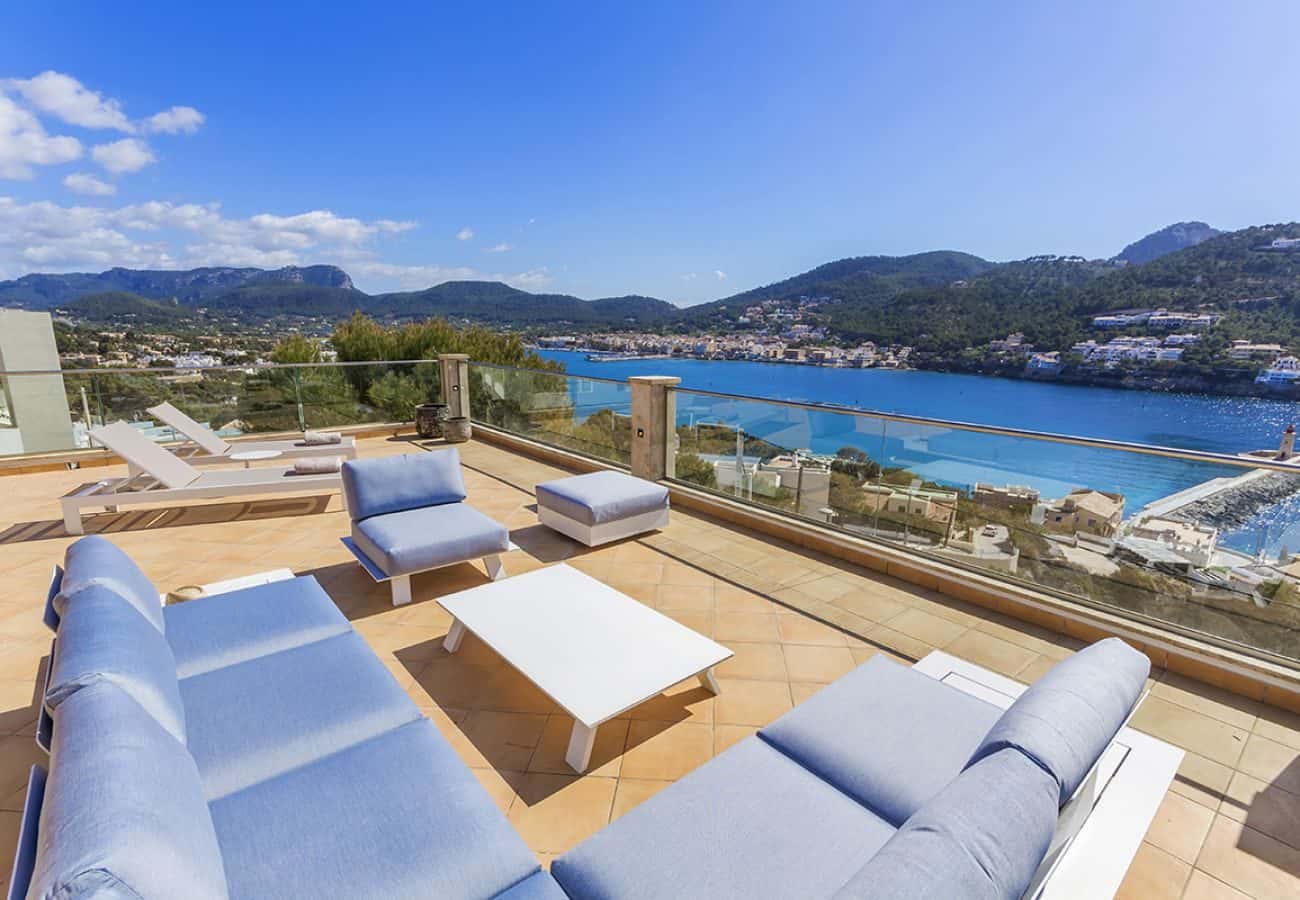
Villa Views Port Andratx
near Andratx (West)
- 7 guests
- 4 bedrooms
- 3 bathrooms
Registration no.: ETV/9286
per night
€1,176.47 – €1,848.74
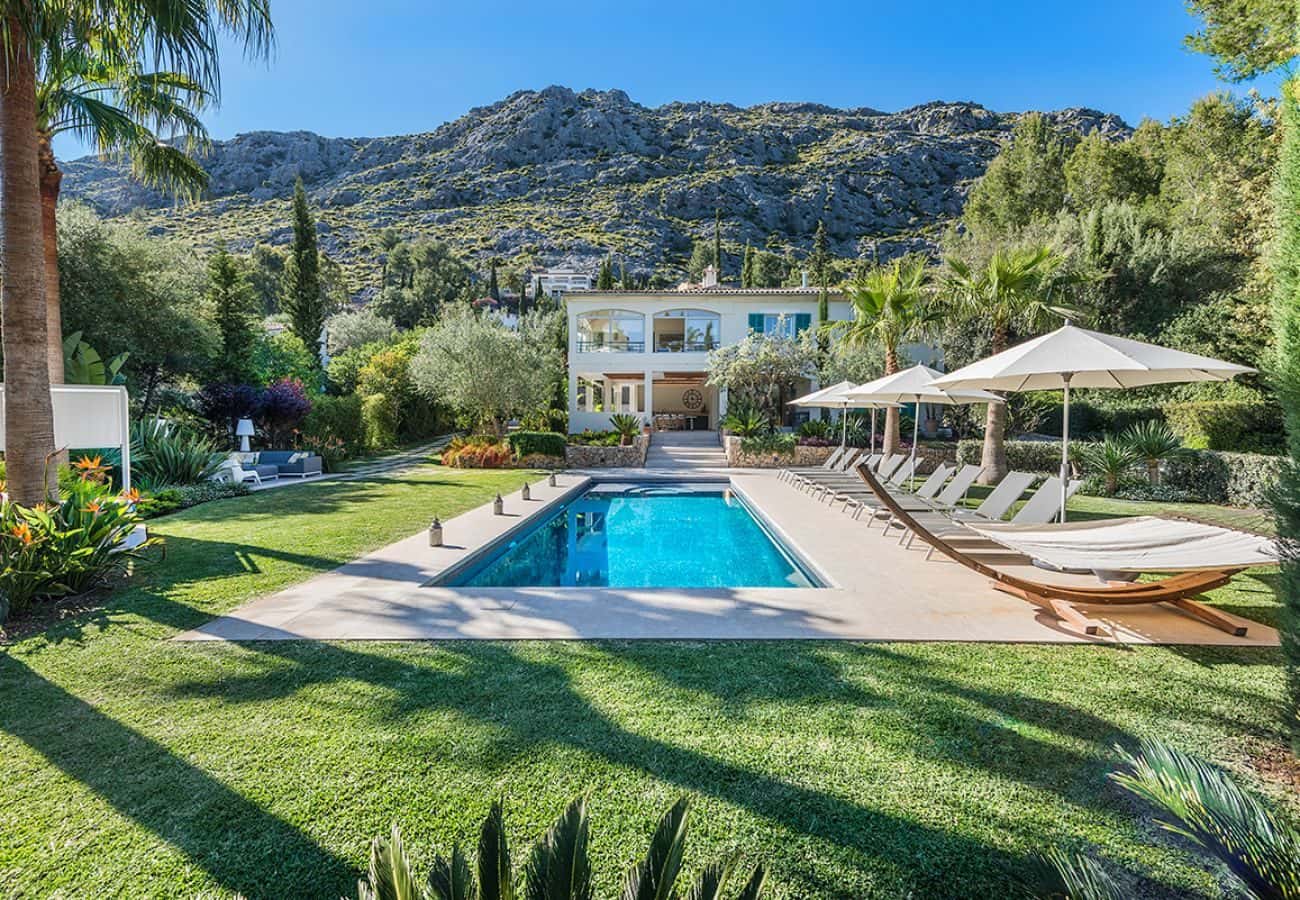
Villa Longa
near Pollença (North)
- 10 guests
- 5 bedrooms
- 5 bathrooms
Registration no.: ETV/312
per night
€1,310.93 – €1,899.16
There are currently no holiday homes listed here for Island centre.
Finca in the centre of Mallorca: villages and landscape
Those looking for a finca in the centre of Mallorca end up in a region that many connoisseurs value precisely for its down-to-earth character, far from the bustle of the coast. It consists of numerous municipalities, including Alaró, Sineu and Binissalem, each with its own character and history. Those looking for a holiday home in the centre of Mallorca here will usually find exactly that: old masonry, creaking shutters, views of almond trees rather than beach promenades. The plain, known by islanders since time immemorial as Es Pla, forms the flat heartland, while surrounding hills and mountain foothills provide variety in the landscape.
Some places have archaeological roots stretching far back. In the municipality of Alaró, traces can be found dating back to the Talayotic period, long before the Romans or Moors shaped the island. Winegrowing also has deep roots in Mallorca: vines were cultivated here as early as Roman times, a tradition that continues to this day at the wineries around Binissalem. Those strolling through the villages sense this layered heritage almost incidentally, in stone walls, wells and narrow lanes that seem older than their present-day everyday life would suggest.
Not every place in this region merely bears the name of a municipality. Sa Cabaneta, for example, is not an independent village but a district of Marratxí, embedded in a network of smaller settlements that together form the municipality. This too shows how small-scale and multifaceted the centre of Mallorca is organised, quite unlike the densely built-up centre of Palma, from which it deliberately sets itself apart. Those renting a finca in this area therefore do not stay in a homogeneous landscape, but in a mosaic of hamlets, market towns and open land, where every day feels a little different. It is precisely this coexistence of proximity and distinctiveness that makes a finca holiday here so appealing.
Arriving and finding your way around the centre
This region lies far from the coastal roads, right in the middle of the network of country roads connecting Palma with the Inca area. Anyone wishing to rent a finca in the centre of Mallorca will generally arrive via this very route and reach Selva from Palma without a detour via the coast. Practical for everyone with a rental car: the distances between the villages remain manageable, and the country roads invite leisurely driving rather than haste. This makes the journey itself a first introduction to the landscape before you arrive at your finca in the centre of Mallorca.
Even without your own car, the region can be explored well in selected places. Inca, with its Estació d’autobusos, is a central transport hub, and the train connection to Palma runs several times an hour here, so that a visit to the town alone is possible even without a rental car. In Santa Maria del Camí, the train also stops regularly on the central island route, while an expressway bypasses the town and the old main road still runs straight through it. My tip: those arriving by train in the early morning avoid the biggest holiday rush on the roads and can get off relaxed in one of the villages.
In the smaller towns, connections are naturally more modest, but sufficient for anyone who plans patiently. Lloseta, for example, has the Lloseta Estació and Lloseta bus stops, two points of access within the town itself. Those who prefer things quieter and already have a car can ignore the bus and enjoy the short drives between the villages as a little excursion of their own, with almond trees and stone walls passing by along the roadside. Either way: the route to your own finca is already part of the holiday here.
Trips to the sea and the surrounding area
Anyone who chooses a holiday apartment in central Mallorca is deliberately not staying directly on the coast, but right in the middle of the island, with short distances in several directions. From here, the Bay of Palma can be reached via the road network, making trips to the southwest coast an easy option without having to spend hours on the road. Other villages such as Alaró clearly show, however, that this region is more about mountains, villages and cultural landscapes than a quick dip in the water. So if you want to swim in the morning and hike by midday, you need to do a little planning here.
For a day by the sea, it is worth looking towards the east coast: the stretch of coast near Coto consists of fine, golden sand and flat rocks bearing traces of former salt extraction – a place with history beneath your feet, even if the strip itself is rather narrow. Those who prefer something more natural will find, at Mollet Can Tem, a transition of rocks, Posidonia remains and sandy patches, where the water often appears clearer than at busier coves. My tip: go on a weekday outside midday hours, and you will have the narrow access roads and small parking areas along the coast to yourself. At weekends and during high season, these quiet spots fill up noticeably faster.
Not every place in central Mallorca has its own access to the sea at all, and that is not really the point of this location. Sineu, for example, has no beach, nor does Marratxí, and Consell has neither a seafront promenade nor a bathing cove. These municipalities thrive on markets, landscapes and village life, not on sand at their doorstep. That is precisely where the appeal lies: you stay centrally, choose your beach day freely, and have the peace and quiet of the villages and hills to yourself on the other days. Anyone settling into a finca in this central area combines both exactly as they please: sea views in the morning, crickets chirping in the garden in the evening.
Monasteries, churches and a talaiot
The town centres of central Mallorca often hide their history behind plain façades, including churches, monasteries and archaeological traces. In Alaró, Plaça de la Vila and the parish church from the 17th century form the heart of the town; this is where village life comes together. In Inca, it is worth taking a walk to the restored sacred buildings from the 18th century: Santa Maria la Major, Santo Domingo, Sant Francesc and the Sant Bartomeu monastery bear witness to how much history is contained in the quiet inland towns. My tip: head for such town centres in the late morning on weekdays, when craftspeople and traders are going about their business and the lanes have not yet sunk into the midday stillness.
There are also substantial discoveries to be made away from the larger towns. In Sencelles, the parish church of Sant Pere went through several construction phases between the 17th and 19th centuries, and nearby the Sencelles monastery was founded in 1851, tracing back to Francinaina Cirer. Anyone interested in the island's prehistory should head to Son Fornés, an archaeological site with an attached museum that provides a good introduction to this early period. At first glance, a talaiot in the region may seem plain and inconspicuous, but there is far more behind it: these stone structures are among the defining forms with which the early inhabitants of the Balearic Islands once shaped their settlements. Those who take the time will get a sense of how far back settlement in this landscape actually goes.
Two more destinations belong on every list for anyone wishing to explore the region seriously. On Puig de Randa, three historic monastic complexes stand on the slopes, a worthwhile excursion destination that combines landscape and cultural history. And at Els Calderers, an open-air museum awaits you that makes the rural everyday life of times gone by tangible, with stables, living quarters and workshops in the open air. Anyone looking for a peaceful afternoon programme will find an atmospheric contrast between monastic tranquillity and everyday museum life in both places. From a finca in the region, they are within easy driving distance, so a day like this fits naturally into a holiday.
Markets, cuisine and everyday provisions in the centre of Mallorca
Every town in the centre of Mallorca has its own market day, and those who plan around it get a genuine feel for life away from the coast. Wednesday is market day in Sineu, and to this day an agricultural livestock section shapes the scene, a feature that distinguishes this market from other island markets. Aubergines, tomatoes and potatoes sit alongside olives, handicrafts, ceramics, baked goods and paprika sausage between the stalls, with animals occasionally bleating in between. The town itself offers enough infrastructure—with cafés, bakeries, food shops, fashion retailers, and sports and fitness businesses—to combine market day with a relaxed stroll. My tip: if you want to experience the market at leisure, come early, before the stalls get busier later in the morning.
The smaller municipalities are also worth visiting for their weekly markets, though each has a different character. In Algaida there are fresh foods and practical goods; it is not a souvenir market, but a place for genuine everyday needs. Things are similarly pragmatic in Sencelles, where the market is clearly geared towards local needs rather than a tourist spectacle, while in Consell fresh produce, plants and everyday items await. The market in Lloseta, by contrast, is better suited to a short detour than a full-day excursion. Those wishing to enjoy the region's cuisine afterwards will find both classic Mallorcan country cooking and an international restaurant scene in Santa Maria del Camí.
In Inca, very different rhythms shape everyday life: school and work commutes, shopping, deliveries and market activity set the pace of the town, a picture that speaks more of lived daily life than of a backdrop. Those who prefer to eat away from the larger towns will find Restaurant Miceli in Selva, a small establishment in an elevated location with views across the landscape, a place for a quiet evening after a market day. It is precisely this mix of busy market mornings and quiet evening hours that makes dining in the centre of Mallorca so pleasantly understated for everyone setting out to explore from their own finca.
Who the centre of Mallorca is ideal for
Families with children will find this region easy to navigate, because many destinations feel small and manageable. A trip to Marratxí, for example, can be kept short and clearly structured without overwhelming the little ones. Anyone cycling there should avoid heavily trafficked sections and opt for quieter routes instead. The town centre of Santa Maria del Camí is also well suited to a short family outing on foot, compact enough that nobody gets tired legs before the ice cream has melted. This very combination of proximity and tranquillity makes a finca in the centre of Mallorca a good base for families who prefer to travel slowly rather than rush from one destination to the next.
Anyone looking for a sense of rural everyday life will find it in Sineu: the town combines rural surroundings with a compact centre where much can be done on foot. However, it is worth planning the market day carefully, as market crowds and uneven paving quickly make a pushchair a burden, even though the main paths themselves remain easy to use. Those who prefer it quieter should visit the town on an ordinary weekday away from the bustle of the market, then enjoy the lanes almost to themselves.
For travellers wishing to explore beyond beaches and grand façades, the region also has quieter testimonies to offer. The talaiot near Llubí appeals precisely to those interested in pre-Roman traces rather than postcard motifs. And in Lloseta, you should not expect spectacular monuments or an expansive old town, but rather a place without a constant tourist programme, where the residents' everyday life still reveals itself unvarnished. It is precisely such contrasts—quiet villages alongside lively market days—that make a stay in a finca here so varied for different types of travellers.
Small rules for everyday life and traffic
The village centres of central Mallorca are built narrowly, and you notice this especially in the saddle. Around Santa Maria del Camí, the larger roads carry genuine everyday and through traffic, which is why cycling there does not feel like a quiet country ride but demands your full attention. Things are similarly tight at the Plaça Major in Selva, where pedestrians, cars and cyclists share the same narrow space, and only a considerate pace makes the difference. My tip: if you are travelling by bike, it is better to plan such village centres for quieter hours rather than the middle of rush hour.
Parking is one of those small disciplines in this region that is best considered in advance. In Sencelles, leaving the car right by the square is not always the most sensible strategy, especially when there is a market on or a larger festival fills the village centre. Those who remain flexible and, if necessary, accept a walk from the edges of the village spare themselves unnecessary circling. This pragmatism suits the region anyway: here, down-to-earth Mallorcan cuisine with seasonal products matters more than a restaurant strip tailored to visitors, and those who bear that in mind will find their way around more quickly.
Even away from the villages, it is worth checking current notices. At Coto, rules concerning dogs vary depending on the season, which is why the signs posted on site always indicate the latest status. Anyone heading towards Ca Ses Monges in Lloret de Vistalegre should know that no tourist facility with comprehensive provisions awaits there; practical everyday footwear is sufficient for walking around the village and is equally suitable for the more uneven paths in the surrounding area. It is precisely these small, unassuming rules that make everyday life in a finca inland so pleasantly uncomplicated.
Frequently asked questions
Are there beaches directly in the centre of Mallorca?
No, most places inland, such as Binissalem, Marratxí or Sineu, do not have their own beach. Those who want to swim can travel via the road network to the coast, for example to the Bay of Palma. In return, the area scores points with peace and quiet, scenery, and short distances to villages, markets and sights away from the hustle and bustle.
What is the best way to get to Inca by train?
Inca is located on the central railway line, with trains from Palma running several times an hour. For a visit to the town alone, you do not need a hire car; the station is a good starting point for a walk around. There is also the Estació d'autobusos for bus connections to the surrounding area.
When does the market take place in Sineu and what is available there?
The weekly market in Sineu takes place on Wednesdays and features an agricultural livestock section, which sets it apart from other island markets. Aubergines, tomatoes, potatoes, olives, handicrafts, ceramics, animals, baked goods and paprika sausage are offered. With a pushchair, it can be impractical in places due to crowds and uneven paving, but the main paths remain usable.
Is Alaró better suited for a beach day or for hiking?
Alaró offers mountains, villages and cultural landscape rather than a quick swimming stop. The focal points of the town are the Plaça de la Vila and the parish church from the 17th century, along with a historic centre with short distances, narrow streets and parking options. Towards Es Verger, a narrow winding road shortens the ascent, but higher up it becomes narrow and rough in places.
What archaeological discoveries can be made in or around Sant Joan?
In the region lies Son Fornés, an archaeological site with its own museum, a good introduction to the island's prehistory. A talaiot is also among the quiet testimonies of this era. Those who engage with it will find not an ornamental ruin, but one of the typical building forms from the early history of the Balearic Islands, as described in specialist literature. Such places appeal to travellers seeking traces of a much older history away from beaches, manor houses and medieval churches.
How are parking and traffic regulated in smaller towns such as Sencelles or Consell?
In Sencelles, parking the car directly by the square is not always the wisest choice, especially when there is a market on or a larger festival fills the town centre; then a short walk from the edges of the village is more worthwhile than endless circling. Consell, in turn, scores with a strong presence of supermarkets and grocery stores, but offers neither a seafront promenade nor a bathing cove. So anyone looking for sea views is in the wrong place here. A little caution is also advisable at the flea market in Consell, as second-hand goods such as furniture or electrical parts can be delicate and should be inspected more closely before ending up in the boot.